
 How-to
What Vitamins Should We Take Every Day? A Practical Guide
Last Updated: November 8, 2026
Quick Summary
What vitamins should we take every day? For most healthy adults, a varied diet covers most needs, so daily supplements should target specific gaps such as vitamin D for limited sun exposure, B12 for vegans and adults over 50, and folate for pregnancy. Test first and supplement second, and check with your doctor or pharmacist before starting anything new.
- Thirteen essential vitamins fall into fat-soluble and water-soluble groups, which changes how you dose them.
- Take fat-soluble vitamins D, E, and K with a meal containing fat for better absorption.
- Only take iron if a blood test confirms low levels, since excess iron is harmful.
- Adults should stay under 4,000 IU of vitamin D and 3,000 mcg RAE of preformed vitamin A daily.
- Bring all supplement bottles to your pharmacist, since interactions with prescriptions are common.
Table of Contents
- Daily Vitamin Intake for Adults: What the Evidence Actually Supports
- What Vitamins Should I Take Daily for a Woman?
- What Vitamins Should I Take Daily for a Man?
- Which Vitamins Should I Take Quiz: Match Supplements to Your Diet and Life Stage
- How to Read a Supplement Label and Spot Quality Problems
- When Daily Vitamins Become Risky: Interactions, Upper Limits, and Excess Intake
- Build Your Daily Vitamin Routine with Fresh Earth Wellness
- Frequently Asked Questions
Daily Vitamin Intake for Adults: What the Evidence Actually Supports
What vitamins should we take every day? For most healthy adults, the honest answer is fewer than the supplement aisle suggests.
The evidence is more cautious than the marketing. Pew Research Center's 2026 survey on supplement use found that about eight in ten American adults take supplements.
So what actually helps? Three things decide your daily vitamin intake for adults:
- Your diet. What you eat regularly matters more than any pill.
- Your life stage. Pregnancy, age, and activity change your needs.
- Your health status. Tests and a doctor's input beat guesswork.
Below, we walk through the essential vitamins, who benefits from supplements, and how to build a routine that fits your life.
The 13 Essential Vitamins and What They Do
Essential vitamins are the thirteen micronutrients your body cannot make in sufficient amounts and must get from food or supplements. They fall into two groups, and that split explains almost everything about dosing.
The fat-soluble group is vitamins A, D, E, and K. The water-soluble group is vitamin C and the eight B vitamins:
- Thiamine (B1) supports energy release from food
- Riboflavin (B2) helps cells convert food into fuel
- Niacin (B3) supports digestion and skin health
- Pantothenic acid (B5) helps make hormones
- Biotin (B7) supports hair, skin, and nails
- Vitamin B6 helps the nervous system
- Folate (folic acid) matters most before and during pregnancy
- Vitamin B12 supports nerves and red blood cells
Minerals work alongside these, including calcium, iron, magnesium, iodine, selenium, and zinc. Omega-3 fatty acids, protein, and fiber round out a balanced diet.
The practical point: a varied plate of vegetables, fruit, whole grains, protein, and dairy or fortified alternatives covers most of this list. Supplements step in where the plate falls short.
Fat-Soluble vs Water-Soluble: Why It Changes Your Dose
Fat-soluble vitamins dissolve in fat and stay in your body, so they carry a real risk of excess intake. Water-soluble vitamins dissolve in water, and your body flushes what it does not use through urine excretion.
That difference changes how you take them:
- Take fat-soluble vitamins with a meal containing fat. Vitamin D, E, and K absorb better this way.
- Fat-soluble vitamins have an upper intake level. More is not better, and high doses over time can cause harm.
- Water-soluble vitamins are more forgiving. Extra vitamin C mostly leaves your body, though very high doses can upset your stomach.
A common mistake is treating every vitamin the same. If you take a high-dose vitamin E capsule on an empty stomach, you get poor absorption and no benefit. If you take it with breakfast and a glass of milk, absorption improves.
What Vitamins Should I Take Daily for a Woman?
For most women, the highest-value supplements are folate, iron, calcium, and vitamin D, adjusted for life stage. Pregnancy shifts the list. So does menopause.
Here is how the needs break down:
- Pregnancy and trying to conceive: folate is the priority, since it supports early fetal development. Many doctors recommend a prenatal multivitamin rather than single nutrients.
- Menstruating years: iron loss through periods makes iron a nutrient to watch, especially if you feel tired or have heavy periods.
- Perimenopause and after: calcium and vitamin D support bone health as estrogen declines.
- Beauty and hair concerns: biotin, collagen, and B vitamins are popular for hair, skin, and nails. Our biotin, collagen and keratin beauty complex pairs these with hyaluronic acid and botanical extracts for a simple daily routine.
Watch out: iron supplements are not a casual add-on. Too much iron is harmful, and you should only take it if a blood test shows low levels.
What Vitamins Should I Take Daily for a Man?
For most men, vitamin D, magnesium, and zinc top the list, with prostate and urinary support becoming more relevant with age. Iron is usually not needed unless a test shows low levels.
Our saw palmetto extract with probiotics combines 320mg of standardized saw palmetto with probiotic support for urinary health and metabolism.
Other practical points:
- Vitamin D matters for bone, muscle, and immune function, especially for men who work indoors.
- Magnesium supports muscle and nerve function and is often low in processed diets.
- Zinc supports immune function and testosterone metabolism.
- Skip iron unless a doctor confirms a deficiency.
The pattern is the same as for women: test first, supplement second.
Which Vitamins Should I Take Quiz: Match Supplements to Your Diet and Life Stage
Question 3: Do you eat fish, eggs, dairy, or fortified foods regularly? If not, B12 and omega-3 intake may fall short, particularly on a vegan or vegetarian diet.
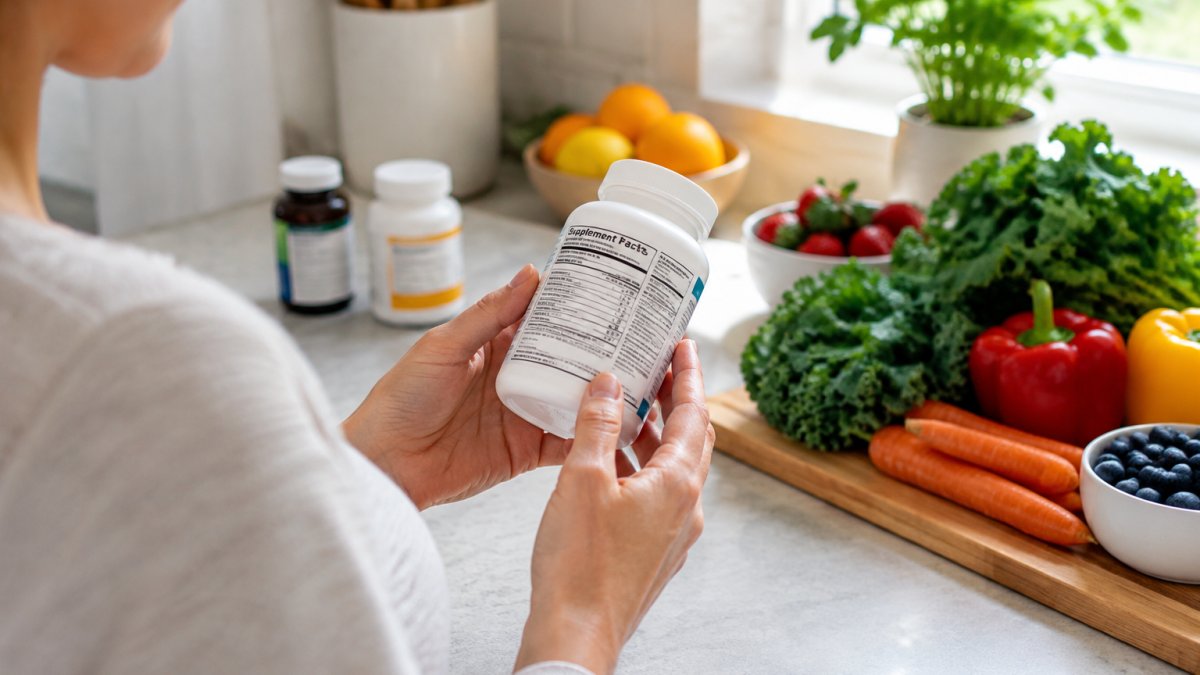
Question 4: Are you pregnant, over 50, or on a restricted diet? Any yes answer means targeted supplements beat a generic multivitamin.
Now match your answers to this practical checklist.
| Nutrient | Who typically needs a supplement? | Why |
|---|---|---|
| Vitamin D | People with limited sun exposure, darker skin, older adults, exclusively breastfed infants | Sunlight is the main source; food provides little unless fortified |
| Vitamin B12 | Vegans, vegetarians, adults over 50, people with absorption issues | Found almost exclusively in animal products; absorption declines with age |
| Folate (folic acid) | People who are pregnant or trying to conceive | Prevents neural tube defects; needs start before conception |
| Iron | Menstruating women, pregnant women, people with diagnosed deficiency | Blood loss and increased needs; supplement only if tested low |
| Calcium | Postmenopausal women, people who avoid dairy, older adults | Bone health; dietary intake often falls short |
| Omega-3 fatty acids (EPA/DHA) | People who rarely eat fish | Supports heart and brain health; algae oil is a vegan source |
| Iodine | Pregnant women, people who avoid iodized salt | Thyroid function and fetal development |
| Zinc | Older adults, vegetarians, people with digestive disorders | Immune function; plant sources are less absorbable |
For everyone else, a varied diet rich in vegetables, fruit, whole grains, protein, and dairy or fortified alternatives covers most needs.
Watch out: Iron and vitamin A are the two nutrients where excess is most harmful. Never take iron unless a blood test confirms deficiency, and avoid high-dose vitamin A supplements unless specifically recommended.
For readers focused on eye health, our AREDS 2 eye vitamin with lutein and zinc follows that formula. If you are still planning your routine, our guide to buying natural vitamins online covers how to start without overspending.
How to Read a Supplement Label and Spot Quality Problems
A good label tells you three things fast: what is in the bottle, how much per serving, and who made it. A bad label hides all three behind vague blends.
Check these items in order:
- Serving size and servings per container. A label showing "500mg" may mean per two capsules, not one.
- Percent daily value. This shows how much of your recommended daily amount one serving provides.
- Proprietary blends. These hide individual doses. Prefer products that list each ingredient amount.
- Third-party testing. Look for a seal from an independent testing lab.
- Expiration date and lot number. No date means no way to judge freshness.
- Allergens and fillers. Check for unnecessary colors, sugars, or common allergens.
A common mistake is assuming a higher dose is better. It is not. For more on spotting fakes and cutting costs, read our affordable natural supplement shopping tips.
When Daily Vitamins Become Risky: Interactions, Upper Limits, and Excess Intake
Supplements are not risk-free, and the risks grow when you stack products or take high doses without advice.
Key upper limits to know (adults):
- Vitamin A: 3,000 mcg RAE per day from preformed vitamin A (retinol). High intakes over time can cause liver damage and bone problems. Beta-carotene from plants does not carry the same risk.
- Vitamin D: 4,000 IU per day. Very high doses can cause high blood calcium, leading to nausea, weakness, and kidney stones.
- Vitamin E: 1,000 mg per day. High doses may increase bleeding risk, especially with blood thinners.
- Iron: 45 mg per day. Excess iron can cause constipation, nausea, and organ damage in people without deficiency.
- Zinc: 40 mg per day. Long-term high intake can interfere with copper absorption and weaken immunity.
- Vitamin B6: 100 mg per day. High doses over time can cause nerve damage.
Common medication interactions:
- Vitamin K can reduce the effectiveness of warfarin and other blood thinners. If you take one, keep your vitamin K intake steady and tell your doctor before starting a supplement.
- Calcium and iron can block the absorption of some antibiotics (tetracyclines, fluoroquinolones) and thyroid medication. Separate doses by at least two hours.
- Vitamin E in high doses may raise bleeding risk, particularly when combined with aspirin or anticoagulants.
- St. John's wort (often taken for mood) interacts with many medications, including birth control pills and antidepressants.
- Potassium supplements can be dangerous with certain blood pressure medications and kidney disease.
Duplicate dosing is a common and preventable problem.
Watch out: If you take a prescription medicine, bring all your supplement bottles to your pharmacist for a review.
TIME's reporting on supplement necessity notes that most dietary supplements are not necessary for healthy people, though experts recommend some.
Build Your Daily Vitamin Routine with Fresh Earth Wellness
The best routine is small, specific, and easy to keep.
Fresh Earth Wellness offers a carefully chosen range of health and wellness products, from vitamins to skincare, with a convenient online shopping experience and customer support.
Start with the basics: a multivitamin if your diet is uneven, vitamin D if you see little sun, and targeted support for your life stage.
Ready to simplify your shelf?
Frequently Asked Questions
What is the best vitamin to take every day?
There is no single best vitamin for everyone. For most adults, vitamin D and vitamin B12 are the two worth discussing with a doctor first, because deficiency is common and food sources are limited. Vitamin D supports bone and immune health, while B12 matters most for people over 50 and anyone eating little animal protein. A balanced diet should cover the rest. If you want one product, a multivitamin covers broad daily vitamins, but it does not replace food or fix a poor diet.
Do healthy adults need a daily multivitamin?
Most healthy adults who eat a varied diet do not need a multivitamin, and research from Harvard Health reports that multivitamins do not reduce the chance of heart disease or mental decline. However, a multivitamin can help bridge gaps during pregnancy, restrictive diets, or busy periods when meals slip. Think of daily vitamins as insurance, not a substitute for food. If you are unsure, ask your doctor or pharmacist before starting one.
Can you take too many vitamins every day?
Yes. Fat-soluble vitamins such as A, D, E, and K are stored in the body, so excess intake can build up over time. Water-soluble vitamins like C and B are mostly excreted in urine, but very high doses can still cause problems. Every nutrient has an upper intake level, and exceeding it regularly is not safe. Check labels for doses near or above the upper limit, and avoid stacking a multivitamin with single-nutrient supplements unless a clinician advises it.
Should vitamin needs change with age or diet?
They can. Adults over 50 absorb vitamin B12 less efficiently from food, so fortified foods or a supplement may help. Pregnancy raises needs for folate, iron, and vitamin D. People eating vegan or vegetarian diets may need B12, iron, and omega-3 fatty acids. The same daily vitamins are not right for everyone, which is why a short quiz or a conversation with your doctor is a better starting point than copying someone else's routine.