 blog
Affordable Natural Supplement Shopping Tips for 2026
Last Updated: October 23, 2026
Quick Summary
Affordable supplement shopping means comparing cost per serving, not sticker price: divide the total price by servings per container. Buy only from sellers who publish third-party test results, list a real business address, and show clear serving counts, since verified quality plus cost per serving beats a low price every time.
- Online supplement purchases rose 23% globally, so compare at least three sellers on the same product before buying.
- A $24 bottle with 30 servings costs $0.80 per serving; a $18 bottle with 30 servings costs $0.60.
- Bulk buying saves money only if the product has a long shelf life and you'll finish it before expiry.
- Read serving size, servings per container, supplement facts amounts, and other ingredients before anything else.
- Ask the seller for the batch certificate of analysis; a real seller will send it.
Table of Contents
- Why Affordable Natural Supplement Shopping Takes More Than a Low Price
- Where to Buy Supplements Online Without Overpaying
- How to Compare Supplement Prices by Cost Per Serving
- A Practical Supplement Label Guide for Budget Shoppers
- Why Third-Party Tested Supplements Are Worth the Search
- Red Flags That Make a Cheap Supplement a Bad Deal
- Building a Budget-Friendly Natural Supplement Routine
- Frequently Asked Questions
Why Affordable Natural Supplement Shopping Takes More Than a Low Price
The U.S. dietary supplements market hit $209.5 billion in 2025, according to Grand View Research's market analysis, and it's projected to reach $228.2 billion in 2026. With that much money moving, affordable natural supplement shopping tips matter more than ever.
Here's the problem most guides skip: a low sticker price tells you nothing about value. A cheap bottle with 30 servings costs less per pill than a pricier bottle with 90 servings. And a budget supplement with no testing behind it is money wasted, not money saved.
Below, we'll show you exactly how to compare prices, read labels, and spot bad deals. The approach has one core idea: cost per serving plus verified quality beats a low price every time.
Where to Buy Supplements Online Without Overpaying
Buy supplements online from sellers who publish third-party test results, list a real business address, and show clear serving counts. Those three signals separate a legitimate store from a marketplace listing you'll regret.
Online supplement purchases rose 23% globally, per Market.us reporting. More sellers means more noise. Use this checklist before you check out:
- Does the seller list a physical address and a working phone line?
- Are batch test certificates available on request?
- Does the label show servings per container, not just capsule count?
- Is the return policy written in plain language?
- Do reviews mention delivery and support, not just the product?
A common mistake is buying from the first search result. Compare at least three sellers on the same product before you commit.
How to Compare Supplement Prices by Cost Per Serving
Cost per serving is the only price comparison that matters. Divide the total price by the number of servings in the bottle. That number lets you compare a 60-capsule bottle against a 120-capsule bottle fairly.
The Cost-Per-Serving Formula
Cost per serving = total price ÷ servings per container.
Work through one example. A bottle with 90 capsules taken three per day gives you 30 servings. If that bottle costs $24, your cost per serving is $0.80. A second bottle at $18 with 60 capsules taken two per day gives 30 servings too, at $0.60 per serving. The cheaper bottle wins here, but only because the serving math says so.
Run this math on any product before buying. You can practice on a single-ingredient option, which states its per-serving dose clearly.
When Bulk Buying Actually Saves Money
Bulk buying saves money only when three things hold: the product has a long shelf life, you'll finish it before it expires, and the per-serving price actually drops. Many multi-bottle bundles do cut the per-serving cost. Some don't. Check the math on a bundle before assuming the bigger box is the better deal.
The cost-per-serving math is simple, and these examples show how it changes which bottle actually wins.
| Bottle | Price | Servings | Cost per serving |
|---|---|---|---|
| 90 capsules, three per day | $24 | 30 | $0.80 |
| 60 capsules, two per day | $18 | 30 | $0.60 |
A Practical Supplement Label Guide for Budget Shoppers
A supplement label guide starts with four fields: serving size, servings per container, supplement facts amounts, and the other ingredients list. Read those four before anything else on the bottle.
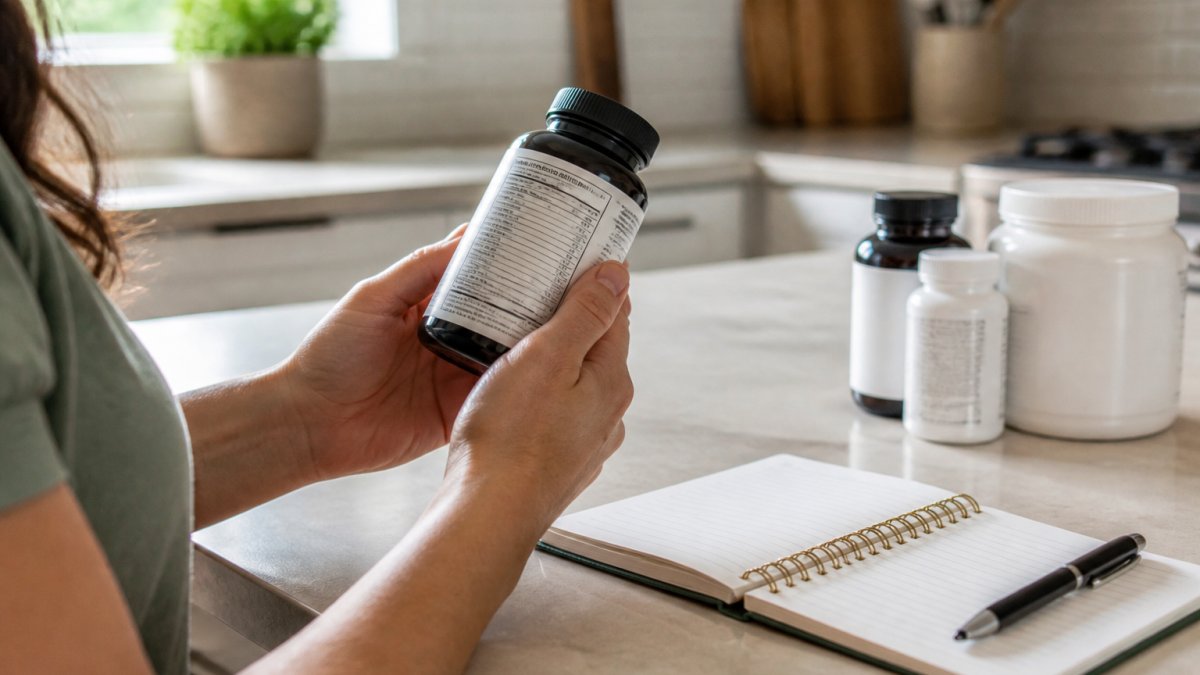
Most shoppers read the front label and stop. The back tells the real story.
- Serving size: tells you how many capsules equal one dose
- Servings per container: the number you divide price by
- Supplement facts: check that the dose matches what studies use
- Other ingredients: fillers and binders add cost without benefit
Our product pages show how serving counts and capsule-per-dose details appear on a real listing. Apply the same check to every bottle you consider.
Why Third-Party Tested Supplements Are Worth the Search
Third-party tested supplements carry proof that an independent lab checked identity, potency, and contaminants. That proof is what separates a real bargain from a gamble.
Supplements are not regulated like prescription medicines, which is why GoodRx's guide to choosing quality vitamins tells shoppers to research brands before buying. A 2023 paper in PubMed Central on online supplement purchasing risk examines how consumers weigh risk when buying supplements online. The takeaway for shoppers: verify, don't assume.
Look for a certificate of analysis, a batch number, and a lab name you can search. A gummy product is a good example of where testing matters, since gummy formulas vary widely in what they actually contain.
Red Flags That Make a Cheap Supplement a Bad Deal
A cheap supplement becomes a bad deal when the label hides something. Watch for these signals:
- Proprietary blends that hide individual doses behind one total number
- No servings-per-container figure anywhere on the label
- Miracle claims about curing conditions or replacing medication
- No business address or contact details on the site
- Prices far below every other seller for the same product
"Natural" does not guarantee safe, either. Stanford Medicine's review of supplement myths notes that most people don't need supplements and that natural doesn't always mean safe. A bargain that skips testing isn't a bargain.
Building a Budget-Friendly Natural Supplement Routine
A budget-friendly routine starts with what you actually need, not what's on sale. Stanford's experts make the case that most people don't need supplements at all, so start there. Then add only what fills a real gap.
Personalized nutrition is one of the trends shaping 2026, per Glanbia Nutrition's trend report. That fits a budget approach: buy fewer products, matched to your needs.
Try this order:
- List the gaps in your diet or routine
- Pick one product that addresses the biggest gap
- Compare three sellers on cost per serving
- Confirm third-party testing before buying
- Add a second product only after the first proves useful
A multi-ingredient daily option can cover several needs in one bottle, which often costs less than buying each ingredient separately.
Frequently Asked Questions
How can I find affordable natural supplements without compromising quality?
Start by comparing cost per serving rather than the sticker price, since a larger bottle at a higher price can still be the better value. Read the supplement label to confirm the amount of active ingredient per dose, and look for third-party tested supplements, which have been checked by an outside lab. Stanford Medicine experts note that most people do not need supplements, so focus your budget on the products you will actually use consistently. Buying from a retailer with clear sourcing information and responsive customer support also reduces the risk of counterfeit or expired products.
What should I look for on a supplement label?
A supplement label guide starts with three things: the serving size, the amount of each active ingredient per serving, and the percent daily value where one exists. Check that the ingredient forms match what you intended to buy, and scan for fillers, added sugars, or proprietary blends that hide individual doses. Look for a manufacturer name and address, a lot number, and a best-by date. GoodRx advises researching supplement brands because supplements are not regulated like prescription medications, so the label and third-party testing seals are your main quality signals.
Are store-brand vitamins and supplements as good as name brands?
Store brands can be just as good when they carry the same third-party testing seals and list the same ingredient forms and doses. The brand name on the bottle matters less than the testing, the label transparency, and the cost per serving. Compare two bottles side by side using the label: same active ingredient, same amount per serving, similar testing credentials. If the cheaper option matches on all three, there is little reason to pay more. Where store brands often fall short is customer support and sourcing detail, so check those before committing to a large order.
Is it cheaper to buy supplements in bulk?
Bulk buying lowers the cost per serving only when you will finish the product before it expires and when the per-serving price is genuinely lower than the smaller size. Do the math: divide the total price by the number of servings in the container. A 23% rise in global online supplement purchases, reported by Market.us, means more bulk options are available online, but larger bottles also carry more risk if you are trying a product for the first time. Buy small first, confirm it suits you, then move to the larger size.
Affordable supplement shopping comes down to discipline: run the serving math, demand test results, and buy only what you'll use. Fresh Earth Wellness makes that easier with a fast, user-friendly store, a customer service team you can actually reach, and a curated range of wellness products at fair prices. Shop now with Fresh Earth Wellness and build a routine that earns its place on your shelf.