 blog
Where to Buy Authentic Wellness Products: 2026 Guide
Table of Contents
- Why Buying Authentic Wellness Products Online Is Harder Than It Looks
- How to Verify Supplement Authenticity Before You Pay
- How to Buy Vitamins Online Safely: A Seller Checklist
- Third-Party Tested Supplements: What the Certifications Actually Mean
- Finding Authentic Skincare Products Online for Sensitive Skin
- Where to Buy Authentic Wellness Products: Retailer Types Compared
- Frequently Asked Questions
Last Updated: October 18, 2026
Why Buying Authentic Wellness Products Online Is Harder Than It Looks
Searching for where to buy authentic wellness products online has become a genuine minefield, and the stakes are higher than most shoppers realize. This guide from Fresh Earth Wellness breaks down exactly how to tell a legitimate seller from a risky one, because the online wellness market has grown faster than the safeguards around it. Storefronts multiply overnight, listings copy each other word for word, and a bottle that looks identical to a trusted brand can arrive with a different batch number, a faded expiration date, or no verifiable manufacturer at all.
Here's what most guides get wrong: they treat authenticity as a trust problem you solve by reading reviews. Reviews are easy to fake. What actually separates a safe purchase from a risky one comes down to documentation, seller accountability, and whether the product can be traced back to a real manufacturer.
Below, we'll show you exactly how to check a seller before you pay, what certifications actually mean, and how to shop for vitamins and skincare with confidence.
How to Verify Supplement Authenticity Before You Pay
Verifying supplement authenticity means confirming three things before checkout: the seller is authorized, the label matches the manufacturer's official listing, and the product carries traceable batch and expiration data. Skip any one of those and you're relying on hope.
A common mistake is assuming a polished product page equals a legitimate seller. In practice, counterfeit listings often have better photography than the real thing. Start with the seller, not the product.
- Check whether the retailer names the manufacturer and distributor openly
- Look for a physical business address and a working customer support contact
- Confirm the brand's own website lists the retailer as an authorized seller
- Search the product's batch number against the manufacturer's records where available
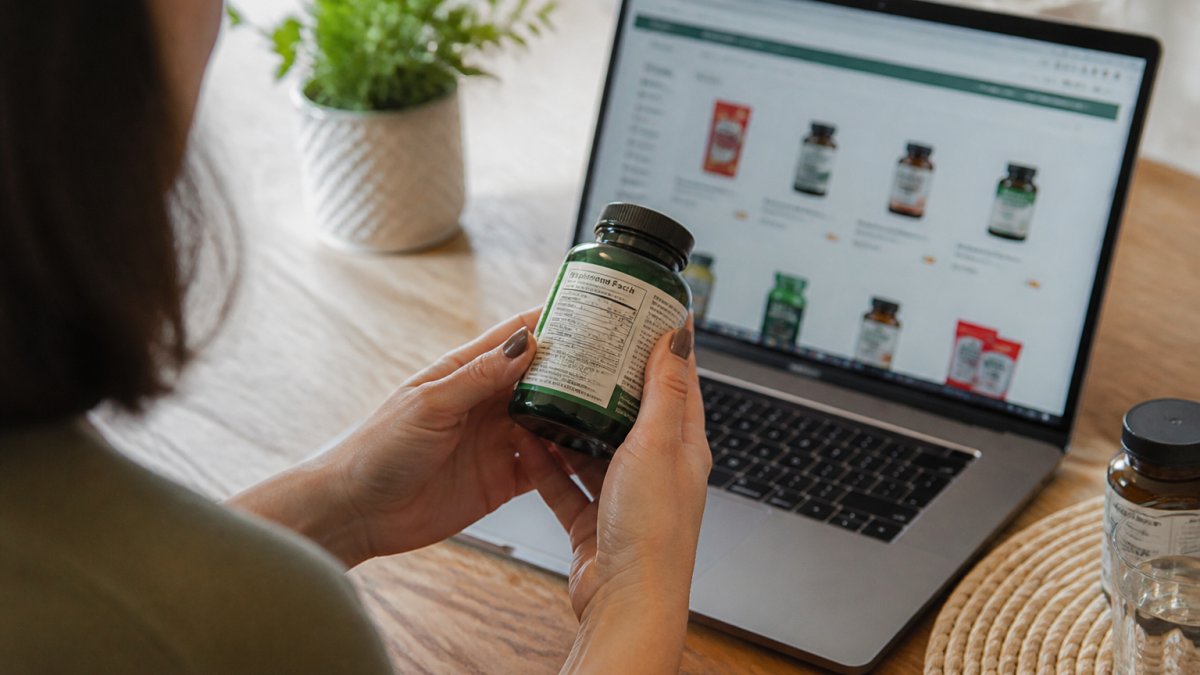
Reading Labels, Batch Numbers, and Expiration Dates
A legitimate supplement label tells a complete story. It names the manufacturer, lists ingredients with amounts, shows a batch or lot number, and prints a clear expiration date. If any of those are missing, smudged, or stickered over, walk away.
Ingredient transparency matters just as much. Vague blends that hide individual amounts make it impossible to judge what you're actually taking. Look for full disclosure, allergen warnings, and storage instructions. Expiration dates should be printed, not handwritten, and batch numbers should be legible enough to photograph and keep.
How to Buy Vitamins Online Safely: A Seller Checklist
Buying vitamins online safely comes down to running the same short checklist every time, no matter how familiar the store looks. Use this before you enter payment details:
- Seller publishes a physical address and a reachable support channel
- Product page names the manufacturer and distributor
- Batch number and expiration date are visible on the listing or packaging
- Return policy is stated in plain language, including who pays return shipping
- The brand's official site confirms the seller as authorized
- Certifications are named specifically, not just implied with a badge
- Reviews mention product quality and shipping, not just speed
If a seller fails two or more of these, treat the listing as unverified. Cheap prices on premium products are a warning sign, not a bargain. Counterfeiters compete on price because that's the only lever they have.
This is where a customer-service-oriented retailer earns trust. At Fresh Earth Wellness, we are customer-service-oriented, so if something about an order looks wrong, you can reach a person who can actually trace it.
Third-Party Tested Supplements: What the Certifications Actually Mean
Third-party tested supplements are products sent to an independent lab to confirm identity, potency, and purity, separate from the manufacturer's own quality checks. The certification only means something if you know which lab tested it and what they tested for. This is the evidence-and-quality-standards gap most buying guides skip: they show you a badge and move on. Here's how to read the badge.
Not all certifications are equal, because they don't all verify the same thing. Broadly, they fall into three groups:
- Facility certifications verify that a manufacturing plant follows good manufacturing practices (GMP). They tell you the production environment is controlled, not that a specific bottle contains what the label says. Examples include NSF/ANSI 455-2 and USP's facility verification programs.
- Finished-product certifications verify the contents of the product itself, identity, potency, and sometimes purity. These are closer to what a shopper actually cares about, because they tie testing to the finished goods. NSF Certified for Sport and USP Verified are the best-known examples in the supplement space.
- Contaminant-specific testing checks for particular risks such as heavy metals, microbes, or banned substances. A product can pass one contaminant screen and still fail another, so the scope matters as much as the logo.
A logo without a named certifying body and a stated scope of testing is decoration. Ask three questions about any certification claim:
- Which organization performed the testing?
- What exactly was tested: the facility, the ingredient, or the finished product?
- Is there a certificate or batch record a customer can request?
A fourth question is worth adding for anyone with allergies or dietary restrictions: does the certification cover allergen cross-contact or specific ingredient claims, or only potency? A potency certificate doesn't tell you whether the product is free from a contaminant you react to.
What Quality Claims Do and Don't Establish
Certifications and quality claims are evidence, not guarantees. A GMP facility certification tells you the manufacturing environment is controlled; it doesn't tell you the herbal ingredient was correctly identified or that the dose matches the label.
This distinction matters most with herbal products, where ingredient identity is a common failure point. A certificate confirming potency is only useful if the ingredient itself was verified, so ask whether the testing covered identity as well as quantity. For personal-care items, the equivalent question is whether the certificate covers microbial testing and stability, not just the presence of an active ingredient.
Most practitioners would tell you the same thing: treat certifications as one input among several. Combine them with a traceable batch number, a named manufacturer, and a seller who will answer questions in writing. No single badge replaces that combination.
Finding Authentic Skincare Products Online for Sensitive Skin
Authentic skincare products online are hardest to judge for sensitive skin, because a counterfeit or mislabeled formula can cause a reaction the genuine product never would. Patch testing matters, but so does buying from a seller who can trace the batch.
Start with ingredient transparency. A legitimate listing names every ingredient, flags common allergens, and states the product's shelf life after opening. If the ingredient list is incomplete or the packaging photos look inconsistent across listings, treat it as unverified. For sensitive skin, avoid products with vague "natural" claims and no full disclosure.
Store your skincare away from heat and direct sunlight, and check expiration dates on arrival. A product that arrives with a short remaining shelf life from an otherwise reputable seller is worth flagging to their support team. Genuine sellers want to know.
Where to Buy Authentic Wellness Products: Retailer Types Compared
Where you buy matters as much as what you buy. Each retailer type carries different levels of accountability, and understanding the trade-offs helps you choose the right channel for your needs. The table below compares retailer types on the criteria that actually determine authenticity: who is accountable for the product, how you can verify the seller, and what recourse you have if something goes wrong.
| Retailer Type | Who Is Accountable | How to Verify the Seller | Support & Returns | Best For |
|---|---|---|---|---|
| Brand's own site | The manufacturer directly | Confirm the domain matches the brand's official site; check for a published business address | Direct from maker; policy set by brand | Single-brand loyalty, limited-edition formulas |
| Specialty wellness retailer | The retailer, who curates and vets brands | Ask whether they publish authorized-seller lists; check that product pages name the manufacturer and distributor | Trained staff, stated return window, batch traceability on request | Curated, verified ranges across categories |
| Large marketplace | Split between platform and third-party seller | Check the seller's storefront name against the brand's authorized list; look for a seller rating history and a published return policy | Varies by seller; platform mediation may be slow | Price comparison only, with extra verification steps |
| Pharmacy or clinic | Licensed pharmacist or practitioner | Confirm professional licensing where applicable; ask about sourcing and storage | Professional guidance, especially on interactions | Medication interactions, practitioner-recommended products |
| Subscription box | The subscription operator | Check whether the operator names brands and sourcing in advance; confirm cancellation and return terms | Limited choice; support varies by operator | Discovery, not staples |
Specialty retailers sit in a useful middle ground. They curate a product collection, vet their sellers, and handle customer support themselves, so accountability doesn't disappear into a marketplace's third-party system.
A practical way to use this table: decide first what you're buying. For a single trusted brand, the brand's own site removes the most risk. For a category you're exploring, say, herbal sleep aids or a new skincare line, a specialty retailer that publishes sourcing information gives you curation without losing traceability.
Shipping, Returns, and Seller Accountability
Seller accountability is the part most shoppers ignore until something breaks. Before you buy, confirm who handles returns, how long the window lasts, and whether shipping conditions protect temperature-sensitive products. A seller who can't answer those questions in writing isn't accountable yet.
Keep your order confirmation and packaging until you've verified the batch number and expiration date. If a product arrives damaged, mislabeled, or past date, contact support with photos before discarding anything. Reputable sellers resolve these quickly because their reputation depends on it.
Frequently Asked Questions
Where can I buy authentic wellness products online?
Buy from retailers that name their suppliers, publish third-party testing details, and show batch numbers and expiration dates on the product page. Check that the seller lists a physical business address and a real returns policy before ordering. Marketplaces with anonymous sellers carry more risk because you cannot confirm who holds the stock. A specialist retailer that curates its range and answers product questions directly is usually the safer route for vitamins, herbal products, and skincare.
How can I tell if a wellness product is authentic?
Start with the packaging: seals should be intact, batch numbers and expiration dates should be printed clearly rather than stickered over, and label fonts should be consistent. Then check the seller, not just the product. Look for ingredient transparency, a named manufacturer, and certification claims you can verify on the certifier's own site. If the price sits far below every other listing, treat that as a warning sign rather than a bargain.
Are wellness products from online marketplaces genuine?
Some are, but the risk is higher because stock can come from third-party sellers with no verifiable sourcing. Counterfeit supplements and skincare do appear on large marketplaces, and reviews alone will not confirm authenticity. If you buy through a marketplace, choose listings sold and shipped by the brand itself, and check the seller's reputation and return terms. For anything you take daily or apply to sensitive skin, a retailer that controls its own supply chain is the lower-risk choice.
What should I check in a retailer's shipping and return policies?
Confirm the return window, who pays return postage, and whether opened supplements or skincare can be returned at all. Check the dispatch time and whether orders ship with tracking. A seller that publishes clear policies and offers reachable customer support, by phone or email rather than chatbot only, is more accountable if something arrives damaged or expired. Save your order confirmation and batch number until you have used the product.