 blog
Best Gentle Cleansers for Sensitive Skin in 2026
Table of Contents
- How to Choose the Best Gentle Cleansers for Sensitive Skin
- Cleanser Ingredients to Avoid for Sensitive Skin
- CeraVe vs. Cetaphil Cleanser for Sensitive Skin
- What Makes a Dermatologist-Recommended Cleanser for Sensitive Skin
- How to Wash Sensitive Skin Without Stripping It
- How to Patch-Test and Introduce a New Gentle Cleanser
- Conclusion
- Frequently Asked Questions
Last Updated: October 17, 2026
How to Choose the Best Gentle Cleansers for Sensitive Skin
Finding the best gentle cleansers for sensitive skin starts with reading the label, not the marketing.
A gentle cleanser is a facial cleanser formulated to remove makeup, sunscreen, and daily grime without disrupting the skin barrier or leaving skin tight and dry.
Below, we break down how to match a cleanser to your skin type, which ingredients to avoid, how the two most-compared pharmacy brands stack up, and how to introduce a new product without triggering a reaction.
Match the Cleanser Format to Your Skin Type
Cleanser format matters as much as the ingredient list. Cream and lotion cleansers suit dry or reactive skin because they leave more of the barrier intact. Gel and foaming cleansers suit oily or combination skin but strip more.
| Format | Best For | Removes Makeup | Leaves Skin |
|---|---|---|---|
| Cream cleanser | Dry, reactive, mature skin | Light makeup | Soft, hydrated |
| Lotion cleanser | Normal to dry skin | Light makeup | Comfortable |
| Gel cleanser | Oily, combination skin | Moderate makeup | Fresh, slightly tight |
| Foaming cleanser | Oily skin, humid climates | Moderate makeup | Clean, can feel dry |
| Micellar water | First cleanse, eye makeup | Yes, with a pad | Light residue |
A common mistake is choosing a foaming cleanser because it feels like it is working. That squeaky-clean feeling is your skin barrier asking for help.
Cleanser Ingredients to Avoid for Sensitive Skin
The cleanser ingredients to avoid for sensitive skin are the ones that either strip lipids from the stratum corneum or trigger contact reactions in susceptible people. The distinction matters: some ingredients are harsh for almost everyone, while others only cause problems for a minority with a specific sensitivity. Reading a label well means knowing which is which.
Here is what we tell customers to scan for on the back of the bottle, and why each one earns a place on the list:
- Sodium lauryl sulfate (SLS): a high-foaming anionic surfactant that binds to skin proteins and lipids, leaving the barrier tight and more permeable. It is the most reliably stripping surfactant in consumer cleansers.
- Added fragrance and parfum: fragrance mixes can contain dozens of individual compounds, and a contact reaction to one of them can look like generic redness or itching. Fragrance is one of the most common causes of allergic contact dermatitis in cosmetics.
- Essential oils such as citrus, peppermint, eucalyptus, and lavender: these are fragrant by definition and contain volatile compounds that can irritate compromised skin. "Natural" does not mean non-reactive.
- Denatured alcohol: listed near the top of an ingredient list, it dissolves lipids and leaves the barrier drier. Small amounts lower down are usually tolerable.
- Physical exfoliants such as walnut shell, apricot kernel, and salt or sugar scrubs: these create micro-tears and should not be part of a daily cleanser for reactive skin.
- Cocamidopropyl betaine: a mild surfactant that suits most people but is a known contact allergen for a minority. If you react to "gentle" formulas repeatedly, this is one to suspect.
- Methylisothiazolinone (MI) and methylchloroisothiazolinone (MCI): preservatives used in some water-based products; they are uncommon in leave-on skincare now but still appear in rinse-off formulas and are a recognized contact allergen.
Why "gentle" is not a regulated claim
No regulator defines what counts as a gentle cleanser. A brand can print "gentle" or "sensitive" on the front of a bottle without changing the surfactant system inside. That is why the back label matters more than the front, and why the same word can describe a cream cleanser with six ingredients and a foaming wash with SLS and fragrance.
Matching exclusions to your sensitivity pattern
The ingredient to avoid depends on what kind of sensitivity you have. A common pattern is:
- Barrier dryness and tightness after washing: prioritize low-foaming, cream or lotion formulas and avoid SLS and high-foaming surfactant systems.
- Rosacea-prone skin: fragrance, essential oils, and drying alcohols are the usual first exclusions; lukewarm water and fingertip application matter as much as the formula.
- Eczema-prone skin: fragrance and harsh surfactants are the main offenders, and a short ingredient list reduces the number of variables to react to.
- Contact allergy or a history of reactions: a patch test or dermatologist-guided ingredient review is more useful than any generic "free-from" list, because the trigger may be a preservative or surfactant rather than fragrance.
If you have a diagnosed condition such as rosacea, eczema, or a known contact allergy, treat this list as a starting point for a conversation with a clinician rather than a substitute for one. Individual reactions vary, and a product that suits one reactive-skin user can still irritate the next.
CeraVe vs. Cetaphil Cleanser for Sensitive Skin
Both brands dominate the pharmacy aisle, and both are widely recommended by dermatologists. The CeraVe vs.
CeraVe's hydrating cleanser is built around ceramides and hyaluronic acid, and it suits people whose main concern is a compromised skin barrier.
Neither is universally better. If your skin reacts to almost everything, start with the shorter list. If your skin is dry and tight after washing, start with the ceramide option.
What Makes a Dermatologist-Recommended Cleanser for Sensitive Skin
A dermatologist-recommended cleanser for sensitive skin typically shares four traits: a short ingredient list, no added fragrance, a pH close to skin's natural acid mantle, and a non-foaming or low-foaming surfactant system.
Dermatologist-tested and dermatologist-formulated are not the same claim. "Tested" means the finished product went through some form of dermatological assessment. "Formulated" usually means a dermatologist was involved in development.
Look for supporting ingredients that earn their place:
- Ceramides to support barrier repair
- Niacinamide to calm redness over time
- Glycerin for moisture retention
- Amino acid surfactants for gentler cleansing
American Academy of Dermatology guidance on face washing recommends limiting washing to twice daily and using lukewarm water, which reinforces that technique carries as much weight as formula.
How to Wash Sensitive Skin Without Stripping It
Washing sensitive skin without stripping it means lukewarm water, fingertips only, a 30-to-60-second cleanse, and an immediate moisturizer while skin is still slightly damp.
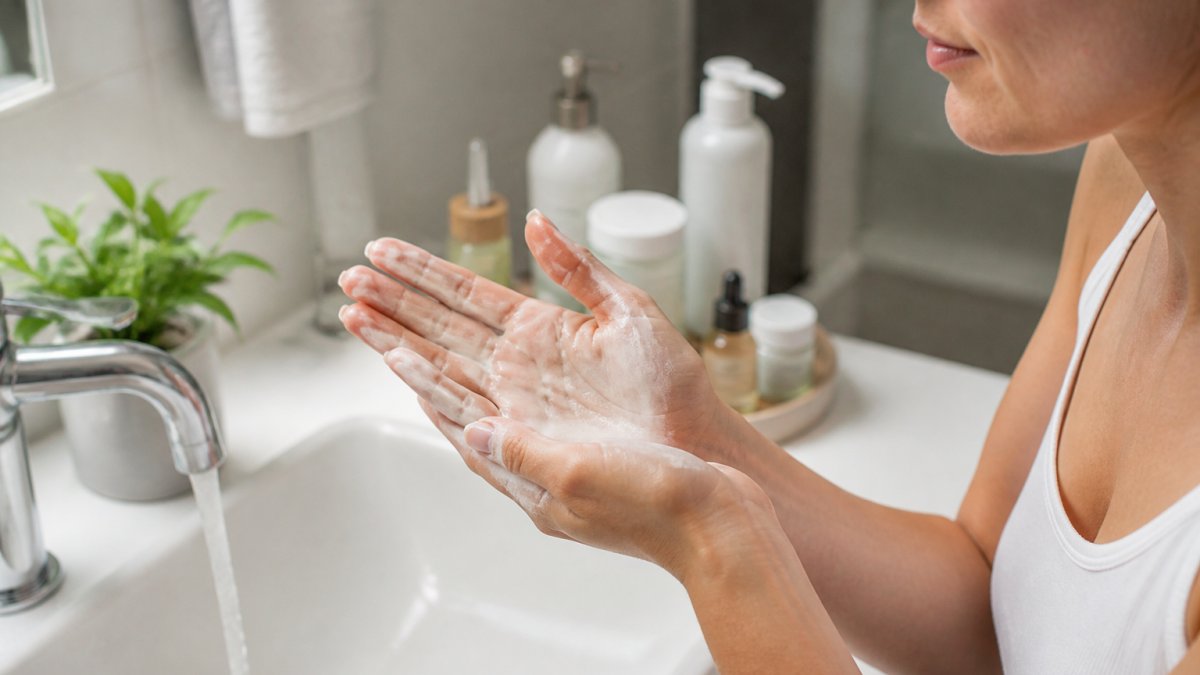
Follow this sequence:
- Wet your face with lukewarm water, never hot
- Dispense a coin-sized amount into damp palms
- Massage with fingertips for 30-60 seconds, avoiding the eye area
- Rinse clean and pat dry with a clean towel, do not rub
- Apply moisturizer within 60 seconds
If you wear sunscreen daily, double cleanse in the evening: a micellar water or cleansing oil first, then your gentle cleanser.
Watch for post-wash signs. Tightness, stinging, or visible redness within ten minutes means the formula is too harsh for daily use.
How to Patch-Test and Introduce a New Gentle Cleanser
Patch testing takes about a week and dramatically reduces the chance of a full-face reaction, but only if you know what you are looking for and how to interpret what you see.
A cautious introduction protocol removes that ambiguity. It is not about whether a product is "safe" in general. It is about whether your skin tolerates this formula, at this concentration, in this routine.
The five-stage introduction protocol
- Stage 1, behind the ear: apply a pea-sized amount behind one ear, leave for 24 hours, and check for redness, itching, or bumps.
- Stage 2, repeat behind the ear: if clear, repeat twice daily for two more days. A delayed reaction can take 48 to 72 hours to appear, so a single 24-hour check is not enough.
- Stage 3, jawline: apply to a small area along the jawline for 24 hours, then check.
- Stage 4, half face: use on one half of the face only for two to three days, so you have a built-in comparison against the untreated side.
- Stage 5, full face: move to full-face use once daily for a week before increasing to twice daily if skin stays calm.
Introduce one new product at a time and give it two full weeks before judging results. If you react at any stage, stop, return to your previous routine until skin settles, and note the ingredient list so you can compare it with products that have worked.
What to look for, and what is not a reaction
A true irritation or allergy signal is redness, stinging, itching, or bumps that appear in the tested area and persist or worsen. A brief tingle during application is common with some formulas and is not automatically a problem, but stinging that lasts after rinsing is.
Two confounders are worth ruling out before you blame the cleanser:
- Purging versus irritation: purging is a temporary increase in breakouts in the weeks after starting an active ingredient such as a retinoid or acid. A cleanser is not an active in that sense, so new breakouts after a cleanser are more likely irritation or a reaction than purging.
- Other changes in the routine: a new moisturizer, a new sunscreen, or a change in water temperature can produce the same redness. That is why the half-face stage matters, it gives you a control.
Adapting the protocol for known sensitivities
If you have a diagnosed condition, adjust the timeline rather than skipping it. For rosacea-prone or eczema-prone skin, extend each stage to three to four days and keep the rest of the routine unchanged so the cleanser is the only variable. For a history of contact allergy, a clinician-supervised patch test is more informative than an at-home one, because it can identify the specific ingredient rather than just the product.
Conclusion
Choosing a gentle cleanser is less about finding a miracle formula and more about removing the things that irritate your skin in the first place. Read the ingredient list, match the format to your skin type, and patch test before you commit.
At Fresh Earth Wellness, our product pages list full ingredients, and our support team will help you compare options before you buy. Shop Now and find a cleanser your skin can live with.
Frequently Asked Questions
Is CeraVe or Cetaphil better for sensitive skin?
Both brands make fragrance-free, non-irritating formulas that suit sensitive skin, but they differ in texture and finish. CeraVe cleansers typically include ceramides and niacinamide to support the skin barrier, while Cetaphil leans on hydrating glycerin and a simpler ingredient list. Cream or lotion versions from either brand tend to suit dry or flaky skin, while foaming versions suit oily or combination skin. The better pick depends on your skin type and how your skin reacts after a week of daily use, not on brand reputation alone.
What ingredients should people with sensitive skin avoid in a cleanser?
Watch for added fragrance and essential oils, which are common triggers for redness and irritation. Sulfates such as sodium lauryl sulfate can leave skin feeling tight after rinsing. Alcohol denat, harsh exfoliating acids in a daily wash, and dyes add risk without much benefit. Preservatives like methylisothiazolinone are worth flagging if you have reacted before. Check the label for fragrance-free rather than unscented, since unscented products can still contain masking fragrances that irritate sensitive skin.
Should sensitive skin use a foaming or cream cleanser?
Cream and lotion cleansers suit dry, flaky, or reactive skin because they clean without stripping moisture. Foaming and gel cleansers work better for oily or combination sensitive skin, especially if you wear makeup or sunscreen daily. A light foaming formula with amino acid surfactants can remove impurities while staying gentle. If your skin feels tight or dry after washing, switch to a cream cleanser or reduce how often you use the foaming one. Format matters more than price for most sensitive-skin routines.
How often should you wash sensitive skin?
Twice daily works for most people, but sensitive skin often does better with a cream cleanser in the morning and a slightly more thorough wash at night to remove sunscreen and makeup. If your skin feels tight, dry, or flaky after washing, cut back to once daily and rinse with lukewarm water in between. Use water that feels comfortably warm rather than hot, since heat strips the skin barrier. Adjust frequency based on how your skin feels an hour after cleansing, not on a fixed rule.