 blog
Best Organic Skincare for Sensitive Skin: A 2026 Guide
Table of Contents
- Why Organic Skincare Matters for Sensitive Skin
- Best Gentle Cleansers for Sensitive Skin
- Organic Moisturizer for Sensitive Skin: Selection and Application
- How to Transition to Organic Skincare Without Irritation
- Verifying Organic and Natural Claims: What Actually Matters
- Organic Skincare for Eczema, Rosacea, and Reactive Skin
- Complete Skincare Routines by Budget and Concern
- Frequently Asked Questions
Last Updated: October 21, 2026
Why Organic Skincare Matters for Sensitive Skin
Sensitive skin reacts more intensely to irritants; when your barrier is compromised, even gentle products can trigger redness, itching, burning, or flaking.
Organic products skip synthetic pesticides, artificial preservatives, and harsh additives that commonly trigger reactive skin, relying on plant-based ingredients that tend to be gentler on compromised barriers. Fewer ingredients mean fewer potential triggers.
At Fresh Earth Wellness, we know sensitive skin requires a different approach. This guide covers how to identify, select, and use best organic skincare for sensitive skin, including how to transition safely.
Best Gentle Cleansers for Sensitive Skin
A gentle cleanser is the foundation of any sensitive-skin routine, removing dirt, sweat, and excess oil without stripping your barrier, the wrong one can damage your protective layer and worsen sensitivity.
What to Look for in a Gentle Cleanser
The best gentle cleansers sit near your skin's natural pH of 5.5, protecting your acid mantle, and are free of sulfates, harsh detergents that strip natural oils and irritate reactive skin.
Choose creamy or milky textures over foaming formulas: foam comes from surfactants that tend to be drying, while cream cleansers contain emollients that cleanse without stripping.
Look for ceramides, hyaluronic acid, or glycerin to support your barrier while you cleanse, and avoid anything labeled "exfoliating" or "clarifying", these are designed to be aggressive and worsen sensitivity.
Surfactant Systems: What Actually Cleanses Without Stripping
The cleansing agents determine how harsh a formula feels on reactive skin. How the main categories compare:
- Amino acid surfactants (sodium cocoyl glycinate, sodium lauroyl glutamate, sodium cocoyl isethionate): Among the gentlest cleansing agents available, producing soft, low foam that most sensitive skin tolerates well. They cost more to formulate, so they appear mostly in premium cleansers.
- Glucosides (decyl glucoside, coco-glucoside): Plant-derived and very mild, common in micellar waters and gentle gels. They cleanse effectively at low concentrations but feel less "clean" to fans of foaming washes.
- Sulfates (sodium lauryl sulfate, sodium laureth sulfate): Effective and cheap, but SLS is a known irritant that can disrupt the barrier even at low concentrations. Most sensitive-skin formulators avoid it entirely.
- Soap-based cleansers (saponified oils): Often marketed as natural, but true soap's alkaline pH (typically 9-10) can raise skin pH and impair barrier recovery. Syndet bars or cream cleansers near pH 5.5 are better for sensitive skin.
Practical rule: if the first or second ingredient after water is a sulfate, put it back. If it's an amino acid surfactant or a glucoside, it's worth patch testing.
Common Irritants to Avoid
Fragrance, synthetic or "natural," is a leading irritant. Essential oils are concentrated compounds that can trigger reactive skin, lavender, citrus, peppermint, and eucalyptus are common culprits.
Alcohol denat (SD alcohol or isopropyl alcohol) is drying and irritating, used for texture, with no benefit for sensitive skin.
Benzoyl peroxide and salicylic acid fight acne but are too harsh for sensitive skin. If you have both concerns, choose products formulated for both, not standard acne treatments.
Some people react to methylisothiazolinone (MI) and formaldehyde releasers; phenoxyethanol and sodium benzoate are generally better tolerated, though reactions vary.
How to Test a New Cleanser
Patch test on the inner forearm or behind the ear for 24-48 hours before using on your face. If you pass, cleanse once daily for the first week, then twice daily if tolerated. If skin feels tight, stings, or looks red afterward, the product is too harsh regardless of "gentle" marketing.
At Fresh Earth Wellness, we prioritize transparency about what's actually in our products. We list certifications clearly and provide detailed ingredient information so you can make informed decisions about what touches your skin.
Organic Moisturizer for Sensitive Skin: Selection and Application
An organic moisturizer for sensitive skin seals in moisture, supports your barrier, and prevents further irritation. Without the right one, even gentle cleansing won't prevent flares.
The best moisturizers pair occlusives, plant oils, shea butter, or squalane, that prevent water loss with humectants like glycerin or hyaluronic acid that draw moisture in.
Look for minimal ingredient lists: 10-15 key ingredients is safer than 30+, since fewer ingredients mean fewer potential irritants.
Apply to damp skin immediately after cleansing to trap water and maximize hydration.
How to Transition to Organic Skincare Without Irritation
Switching products can trigger flares even when the new ones are gentler. Your skin needs time to adjust, and a rushed transition is one of the biggest mistakes people make.
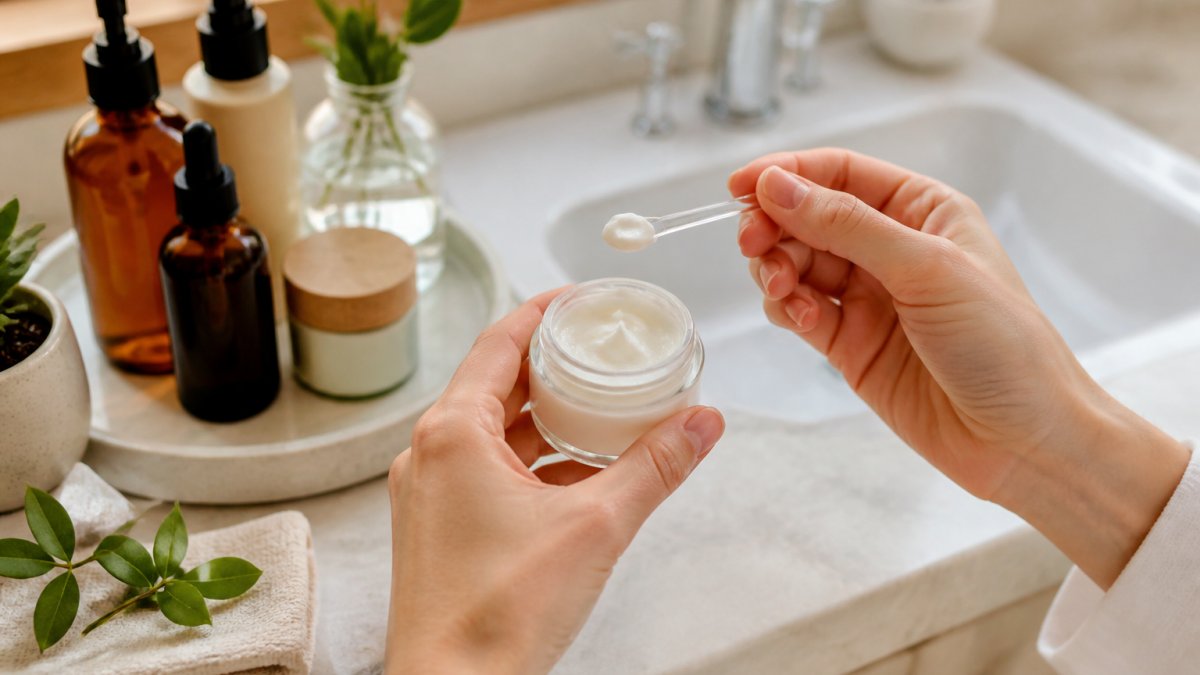
Patch Testing and Introduction Protocol
Before applying any new product to your face, patch test on the inside of your wrist or behind your ear.
If the patch test passes, use the product every other day for the first week, watching for irritation. If tolerated, increase to daily use in week two, this gives skin time to adapt without overwhelming it.
Introduce one new product at a time, spaced at least a week apart. Switch everything at once and a reaction won't tell you which product caused it. It's slower, but it prevents unnecessary flares.
Building Your Routine Step by Step
Start with the essentials: a gentle cleanser and a moisturizer. Use these for at least two weeks before adding anything else. Your skin needs to stabilize on a minimal routine first.
Once your skin is comfortable, add one product at a time. A facial oil or serum comes next if your skin is very dry, then a toner or essence for extra hydration.
Keep a simple log of what you're using and how your skin responds, redness, itching, or texture changes. This helps you identify patterns and troubleshoot faster.
Verifying Organic and Natural Claims: What Actually Matters
Not all products labeled "natural" or "organic" are created equal. Marketing claims often overstate the organic content or benefits.
Natural is unregulated. Any company can slap "natural" on a label regardless of what's actually inside.
Check the ingredient list, not just the front label. Ingredients are listed by concentration, highest to lowest.
Look for specific certifications on the packaging. USDA Organic, ECOCERT, Cosmos, and similar certifications indicate real standards.
At Fresh Earth Wellness, we prioritize transparency about what's actually in our products.
Organic Skincare for Eczema, Rosacea, and Reactive Skin
Eczema, rosacea, and other reactive skin conditions require skincare that goes beyond "gentle." These conditions involve inflammation, barrier dysfunction, and heightened sensitivity. Standard skincare often makes them worse. But there is an important distinction: general sensitive skin is a reactivity pattern, while eczema and rosacea are diagnosed conditions with distinct triggers and treatment pathways. Skincare can support both, but it should not be positioned as a substitute for medical care.
Eczema-Prone Skin: Barrier Repair First
For eczema-prone skin, focus on barrier support. Your skin barrier is compromised, so products must actively repair it rather than just avoid irritating it. Look for ingredients like ceramides, niacinamide, and colloidal oatmeal. These are commonly used in eczema care because they support barrier function and reduce water loss.
- Ceramides (especially ceramide NP, AP, and EOP): These lipids are naturally present in the skin barrier. Topical ceramides can help replenish them, but they work best in formulas that also include cholesterol and fatty acids in roughly the right ratio. A ceramide listed alone is not a guarantee of efficacy.
- Colloidal oatmeal: Recognized by regulators in several regions for skin-protective and soothing properties. It is one of the few "natural" ingredients with a clear mechanism and a long history of use in eczema-prone skin.
- Niacinamide: Supports barrier function and has anti-inflammatory properties, but some reactive skin types report stinging at higher concentrations. Start with lower percentages (2-5%) and patch test.
Avoid essential oils, fragrance, and exfoliating acids during flares. Also be cautious with "natural" preservatives and botanical extracts, plant-derived does not mean non-irritating, and eczema skin is often reactive to multiple botanicals.
Rosacea: Soothing and Trigger Management
Rosacea responds well to soothing, anti-inflammatory ingredients. Centella asiatica (cica), azelaic acid, and licorice root extract are commonly used to calm inflammation and reduce redness. Azelaic acid in particular has a body of clinical use behind it for rosacea, though it can sting initially, introduce it slowly and consider a lower concentration.
Avoid anything hot or spicy, temperature and certain foods trigger rosacea, and your skincare should support this, not work against it. Lukewarm water, gentle patting rather than rubbing, and avoiding physical scrubs all matter.
Reactive Skin: Minimalism With a Purpose
Reactive skin benefits from skin-barrier-focused ingredients: ceramides, hyaluronic acid, and plant oils. Avoid products with alcohol, fragrance, or essential oils. These are common irritants in reactive skin. Stick to products with minimal, clearly beneficial ingredients.
A useful framework is to separate products into three tiers:
- Core support (cleanser, moisturizer, sunscreen): These should be as simple and predictable as possible.
- Targeted support (one active for your main concern): Introduce only after core support is stable.
- Optional extras (masks, oils, essences): Add only if your skin is calm and you can patch test carefully.
The best approach is to work with a dermatologist while using supportive skincare. Your doctor can rule out infections or other conditions that need medical treatment. Your skincare should support that treatment, not replace it. When in doubt, bring your product list to your appointment, a dermatologist can help you identify which ingredients are worth keeping and which are likely triggers.
Complete Skincare Routines by Budget and Concern
Building a full routine doesn't require spending heavily.
| Routine Component | Essential | Budget-Friendly Approach | Mid-Range Approach | Comprehensive Approach |
|---|---|---|---|---|
| Cleanser | Yes | Simple organic formula | Organic with barrier support | Specialized for your skin type |
| Moisturizer | Yes | Basic organic cream | Organic with ceramides | Layered hydration system |
| Targeted treatment | No | Skip initially | One product for main concern | Multiple products by concern |
| Sunscreen | Yes | Mineral SPF 30+ | Organic mineral SPF 30+ | Organic mineral SPF 50+ |
| Occasional treatment | No | None | One mask or oil | Rotating treatments |
Budget routine (under $100 total): A gentle organic cleanser, a simple moisturizer, and a mineral sunscreen. This covers your essentials.
Mid-range routine ($100-250): Add a facial oil or hydrating serum to your basics.
Comprehensive routine ($250+): Build a full system with specialized products for cleansing, hydrating, treating, and protecting.
The key is starting simple and adding only what your skin actually needs.
Sensitive skin doesn't have to limit your skincare options. Explore our selection today and discover skincare that respects your skin's needs. Shop Now
Frequently Asked Questions
How do I know if an organic skincare product is safe for sensitive skin?
Look for certifications from recognized bodies that verify organic claims, and check the ingredient list for known irritants like synthetic fragrances, alcohol, and sulfates. Start with a patch test on a small area of skin for 24-48 hours before full application. Read product reviews from people with similar skin concerns, and choose products labeled hypoallergenic and fragrance-free. Fresh Earth Wellness provides detailed ingredient information so you can make informed choices for your skin type.
What ingredients should sensitive skin avoid in organic products?
Avoid essential oils, synthetic fragrances, alcohol denat, sulfates, and strong preservatives that can trigger irritation or allergic reactions. Even natural ingredients like citrus oils, lavender, and tea tree can irritate reactive skin. Look instead for soothing plant-based ingredients such as chamomile, aloe vera, and oat extract. When transitioning to organic skincare, introduce one product at a time to identify any sensitivities.
How long does it take to see results when switching to organic skincare for sensitive skin?
Most people need 4-6 weeks to adjust to a new organic skincare routine, as your skin barrier stabilizes and adapts. During this period, you may experience mild adjustment reactions. Consistency matters more than speed; use products daily as directed. If irritation persists beyond 2 weeks or worsens, stop and patch test individual products separately.
Can organic moisturizer for sensitive skin replace other treatments like serums?
A quality organic moisturizer provides essential barrier support and hydration, but serums can offer targeted benefits like antioxidants or additional hydration layers. For sensitive skin, start with a gentle cleanser and moisturizer first, then add serums one at a time if needed. Many people with reactive skin find that a robust moisturizer alone is sufficient, especially when choosing products with barrier-supporting ingredients like ceramides and plant oils.