 blog
Buy Natural Vitamins Online Now: A 2026 Guide
Table of Contents
- Buy Natural Vitamins Online Now: What to Know Before You Click
- How to Choose Vitamins That Match Your Health Goals and Diet
- Vitamin Supplement Quality: How to Verify Purity and Potency
- Natural Dietary Supplements: Herbal, Whole-Food, and Vegan Options
- Can You Take Too Many Vitamins? Safety and Interactions
- Comparing Online Vitamin Retailers: Price, Shipping, and Support
- Why Fresh Earth Wellness Makes Buying Natural Vitamins Simple
- Conclusion
- Frequently Asked Questions
Last Updated: October 20, 2026
Buy Natural Vitamins Online Now: What to Know Before You Click
Natural vitamins are dietary supplements made from whole-food and plant-based sources rather than synthetic compounds, and buying them online now means balancing convenience against quality checks.
The front label sells the bottle, but the fine print on the back tells you whether it belongs in your body. Below: choosing vitamins by need and diet, verifying quality, dosage risks, and comparing retailers on total cost.
How to Choose Vitamins That Match Your Health Goals and Diet
Choosing vitamins starts with three filters applied in order: your specific health need, your dietary pattern, and your life stage. Skip any one and you end up with a bottle that is useless or unsuitable.
Match the Product to Your Need, Diet, and Life Stage
Work through this checklist before you buy anything:
- Identify the need. Energy, immunity, bone health, stress support, or a diagnosed deficiency. One clear goal per product.
- Check your diet. Vegans need B12 from fortified or supplement sources. Vegetarians may need iron and omega-3 alternatives.
- Confirm your life stage. Prenatal vitamins differ from standard multivitamins. Older adults often need more vitamin D and B12.
For most healthy adults, a whole-food multivitamin plus targeted vitamin D3 covers the basics, fewer interactions and fewer expiry dates to track than a shelf of single-nutrient bottles.
Vitamin Supplement Quality: How to Verify Purity and Potency
Vitamin supplement quality comes down to two measurable things: purity (the absence of contaminants) and potency (the label matches what is actually in the bottle).
What Third-Party Testing Actually Checks
A third-party test means an independent lab, unconnected to the manufacturer, analyzed the product. Good programs check four things:
- Potency: do the amounts in the bottle match the Supplement Facts panel? Underdosed products are common in low-cost categories.
- Purity and contaminants: heavy metals (lead, arsenic, cadmium, mercury), residual solvents, and microbial contamination.
- Identity: is the ingredient actually what the label says, especially for herbal extracts that are prone to substitution.
A certificate of analysis (COA) records these results for a specific batch. A generic COA on a product page is weak evidence; a batch-specific COA matched to your bottle's lot number is strong. Ask the retailer for it, if they cannot produce it, treat the testing claim as marketing.
Read the Label in This Order
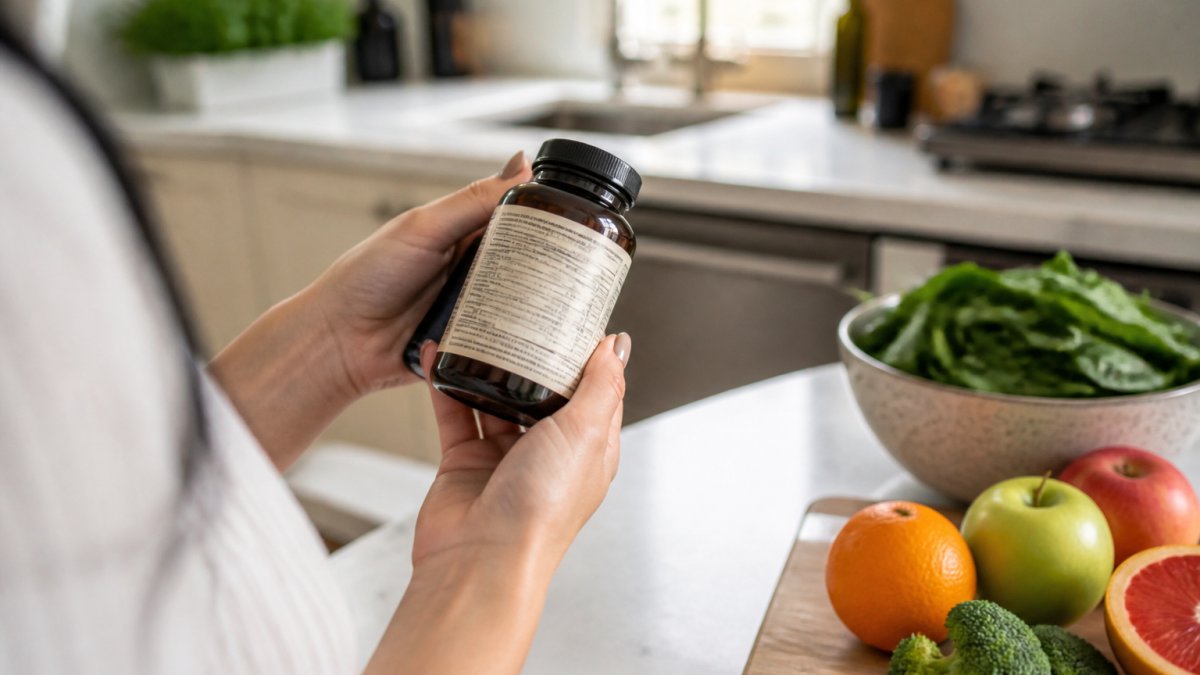
Most shoppers read the front label first. Read it last. Work through the panel in this sequence:
| Label Element | What Good Looks Like | Red Flag |
|---|---|---|
| Serving size | Clear, with number of servings per bottle | Serving size buried or missing |
| Ingredient source | Named plant or food source | "Proprietary blend" with no amounts |
| Potency | Amount per serving matches the panel | Vague "plus" or "complex" claims |
| Other ingredients | Short, recognizable list | Long list of fillers, binders, synthetic dyes |
| Allergens | Clear gluten-free, vegan, non-GMO statements | Missing allergen statement |
| Testing | Batch-specific COA available | No testing info anywhere |
| Expiry and batch | Clear date and lot number | No date or batch code |
Two details matter most. "Proprietary blend" hides individual ingredient amounts, making potency impossible to verify, a caution flag unless the total blend amount is disclosed. And the "other ingredients" list is where fillers, binders, and dyes live; sensitive skin or digestion often reacts to these, not the active nutrients.
Sourcing Transparency: The Question Most Retailers Avoid
Sourcing transparency, where raw ingredients come from, how they are processed, and whether the retailer discloses it, is the quality signal competitors rarely address. Ask:
- Origin: does the product page name the country or region where key ingredients are sourced?
- Form: is the nutrient in a well-absorbed form (for example, chelated minerals or methylated B vitamins) or a cheap oxide form?
- Processing: are whole-food and plant-based sources concentrated gently, or heavily processed into isolated compounds?
A retailer that answers these plainly can usually also produce a batch-specific COA; one that answers none is asking you to trust the front label.
A Five-Minute Pre-Purchase Check
Before you add a natural vitamin to your cart, run this check:
- Confirm the serving size and servings per bottle.
- Scan for "proprietary blend" and decide whether the disclosure is enough.
- Read the other-ingredients list for fillers, binders, and dyes.
If any step fails, move to another product, there are enough well-documented options online that you need not gamble on an unverifiable bottle.
Natural Dietary Supplements: Herbal, Whole-Food, and Vegan Options
Natural dietary supplements split into three practical categories. Herbal supplements use plant extracts such as echinacea or ashwagandha. Whole-food options derive vitamins from concentrated foods like greens powders. Vegan and vegetarian lines avoid animal-derived ingredients and gelatin capsules.
- Herbal supplements: best for targeted support, but check for interactions with medication.
- Whole-food vitamins: gentler on sensitive stomachs and easier to absorb for many people.
- Vegan and vegetarian options: confirm the capsule is plant-based, not gelatin.
- Organic and non-GMO lines: useful if sourcing transparency matters to you.
If you have sensitive skin or a sensitive gut, whole-food and clean-label options are the safer starting point, fillers, binders, and synthetic dyes cause more reactions than the active nutrients.
Can You Take Too Many Vitamins? Safety and Interactions
Yes, you can take too many vitamins. The risk is higher with fat-soluble vitamins A, D, E, and K because the body stores them rather than flushing excess out. Water-soluble vitamins like C and B-complex are more forgiving, but megadoses still cause problems.
The practical rules:
- Do not stack multiple products with overlapping nutrients. Two multivitamins plus a separate D supplement can push you past safe limits.
- Check upper limits against official guidance for your market before combining products.
- Watch herbal interactions. St. John's wort, for example, affects how some medications are metabolized (pubmed.ncbi.nlm.nih.gov).
- Consult a clinician before starting anything if you are pregnant, on prescription medication, or managing a health condition.
This is not a reason to avoid supplements. It is a reason to buy deliberately. One targeted product with a clear dose beats a cabinet full of overlapping bottles.
Comparing Online Vitamin Retailers: Price, Shipping, and Support
Most top-ranking pages for this query are store category pages or product listings. They show bottles and prices but do not teach you how to compare retailers on the factors that decide real cost. This section fills that gap: a buyer-focused framework covering selection, total cost, shipping, subscriptions, returns, and support.
Build a Like-for-Like Comparison Before You Buy
The sticker price is not the price you pay.
1. Unit price, not bottle price. Divide the bottle price by the number of servings (not capsules).
2. Shipping thresholds and speed. Free-shipping minimums vary widely, and a threshold just above your cart total is a classic upsell trap.
**3.
4. Return policy on opened supplements. The most overlooked factor.
**5.
A Practical Comparison Workflow
Use this sequence every time you buy:
- Pick one product and confirm the serving size on the Supplement Facts panel.
- Calculate cost per serving at each retailer.
- Add shipping for your actual cart size, not the free-shipping threshold.
- Check whether a subscription discount applies to a product you already take daily.
This workflow takes about ten minutes and routinely changes which retailer is cheapest once shipping and returns are included. It also protects you from counterfeit or expired stock.
Selection and Curation vs. Endless Catalogs
A large catalog is not automatically better. Retailers with hundreds of near-identical bottles push the comparison work onto you; a curated retailer narrows the field to products it can stand behind. Breadth helps if you need a specific brand or format, curation if you want fewer decisions and more confidence.
What to Do If Something Goes Wrong
Even a careful purchase can go sideways. If a product arrives damaged, expired, or clearly not matching its label, document it before opening: photograph the batch code, expiry, and packaging, then contact support with the batch and order numbers. Retailers with real support resolve this quickly; those without will stall.
Why Fresh Earth Wellness Makes Buying Natural Vitamins Simple
Fresh Earth Wellness was built around the problems that make buying supplements online frustrating. We offer a carefully chosen range of high-quality health and wellness products, from vitamins to skincare, with a fast and user-friendly shopping experience.
What that means in practice:
- Curated selection: we stock products we can stand behind.
- Affordable pricing: premium goods should not require a premium markup.
- Real support: questions about authenticity, expiry, or sourcing get answered by people, not scripts.
- One-stop shopping: vitamins, herbal supplements, and skincare in a single order.
Our years of industry experience inform every product we carry. If you are unsure whether a product suits your diet or life stage, ask us before you buy.
Conclusion
Buying natural vitamins online now should feel simple, but the details that protect your health live in the fine print.
Fresh Earth Wellness makes that process easier with a curated range of high-quality vitamins and wellness products, a fast and user-friendly shopping experience, and customer support that answers real questions. Shop now and build a supplement routine you can actually trust.
Frequently Asked Questions
Where can I buy natural vitamins online?
You can buy natural vitamins online from specialist wellness retailers, brand stores, and large marketplaces. Focus on stores that publish third-party testing details, show clear labels, and offer real customer support. Fresh Earth Wellness stocks natural vitamins, minerals, herbal supplements, and organic skincare in one place, with fast domestic shipping and a support team you can reach if an order goes wrong. Check the product page for purity and potency information before you buy, and confirm the returns policy so you know what happens if a product does not suit you.
How can I tell whether a vitamin supplement is high quality?
Look for third-party testing, a clear supplement facts panel, and a named manufacturer with a contact address. Quality vitamin supplements list the form of each nutrient, such as vitamin D3 rather than a vague blend, and avoid proprietary blends that hide doses. Check for certifications like organic, non-GMO, vegan, and gluten-free where relevant, and confirm an expiry date on arrival. Purity and potency claims should be backed by a certificate of analysis you can request. If a retailer cannot answer basic questions about sourcing or testing, treat that as a warning sign.
Can I take too many vitamins?
Yes. Fat-soluble vitamins such as A, D, E, and K build up in the body, and high doses over time can cause harm. Water-soluble vitamins are generally safer but large doses of some, including B6, can still cause problems. More is not better, and stacking a multivitamin with single-nutrient supplements can push you past safe limits without you noticing. Follow the label, check for overlaps between products, and speak to a clinician before combining supplements or starting a new one if you take medication, are pregnant, or manage a health condition.
Are natural vitamins better than synthetic vitamins?
Not automatically. Natural dietary supplements made from whole-food or herbal sources appeal to people who prefer ingredients closer to their original form, and some nutrients are better absorbed in certain forms. However, a well-made synthetic vitamin can be just as effective, and the deciding factors are dose, form, purity, and whether the product suits your needs. Judge a supplement by its label, testing, and how well it fits your diet and health goals rather than by the word natural alone. Ask for third-party test results if you want proof of quality.