 How-to
How to Check Supplement Expiration Dates on Any Label
Last Updated: November 20, 2026
Quick Summary
To check supplement expiration, turn the bottle upside down and inspect the base, neck, and area below the label seam; on blister packs, check the foil backing. The date is rarely on the front label, so check end flaps on cartons and crimped seals on pouches. If the print is faint, photograph it under bright light and zoom in.
- An expiration date marks the last point a manufacturer guarantees full potency.
- A best-before date signals peak quality, not safety.
- When the date is missing, contact the manufacturer with the lot number and request production date and shelf life in writing.
- Treat an unreadable date as unknown, not expired, and discard the product if nothing confirms it.
- Opening a bottle starts a shorter shelf life, and gummies and softgels change fastest because they hold moisture.
Table of Contents
- Where to Find the Expiration Date on Supplement Packaging
- How to Tell Expiration, Best-Before, and Use-By Dates Apart
- How to Check Expiry Date by Batch Number
- How to Check the Expiry Date of a Product If It Is Erased
- Supplement Shelf Life After Opening: What Changes
- Expired Vitamins Safety: When to Keep and When to Discard
- Storage Conditions That Protect Potency and Packaging Clues
- Stocking Your Shelf with Fresh Earth Wellness
- Frequently Asked Questions
Where to Find the Expiration Date on Supplement Packaging
Learning how to check supplement expiration dates starts with knowing exactly where to look on each package type. The date is rarely on the front label; it is usually stamped, printed, or embossed on a surface you have to turn the container to see. Here is a step-by-step walkthrough for the most common supplement packages.
Bottles (plastic or glass): Turn the bottle upside down and inspect the base first. The date is often stamped in black ink on the bottom rim or embossed directly into the plastic. If you do not see it there, check the neck just below the cap and the area immediately below the label seam. For amber or opaque bottles, tilt the container under a bright lamp and look for shadowed indentations that indicate an embossed date.
Blister packs: Flip the pack over and examine the foil backing. The expiration date is typically printed near the perforated edge or along one side of the foil. On some packs, the date is stamped into the foil rather than printed in ink, so angle the pack toward the light to catch the impression.
Cartons and boxes: Check the end flap first, then the side panel. Some manufacturers print the date only on the outer carton, not on the inner bottle, so keep the carton if you plan to store the product for months. If the carton is discarded, you may lose the only legible date.
Pouches and stick packs: Look at the crimped seal at the top or bottom of the pouch, and then the back panel. Dates on flexible packaging can rub off easily, so avoid handling the seal area more than necessary.
Hard-to-read imprints: If the print is faint, photograph the area with your phone under bright light and zoom in. Embossed dates show up as shadows, and a photo can make a smudged stamp legible when your eyes cannot resolve it. Avoid scratching or rubbing the surface, which can remove the ink entirely.
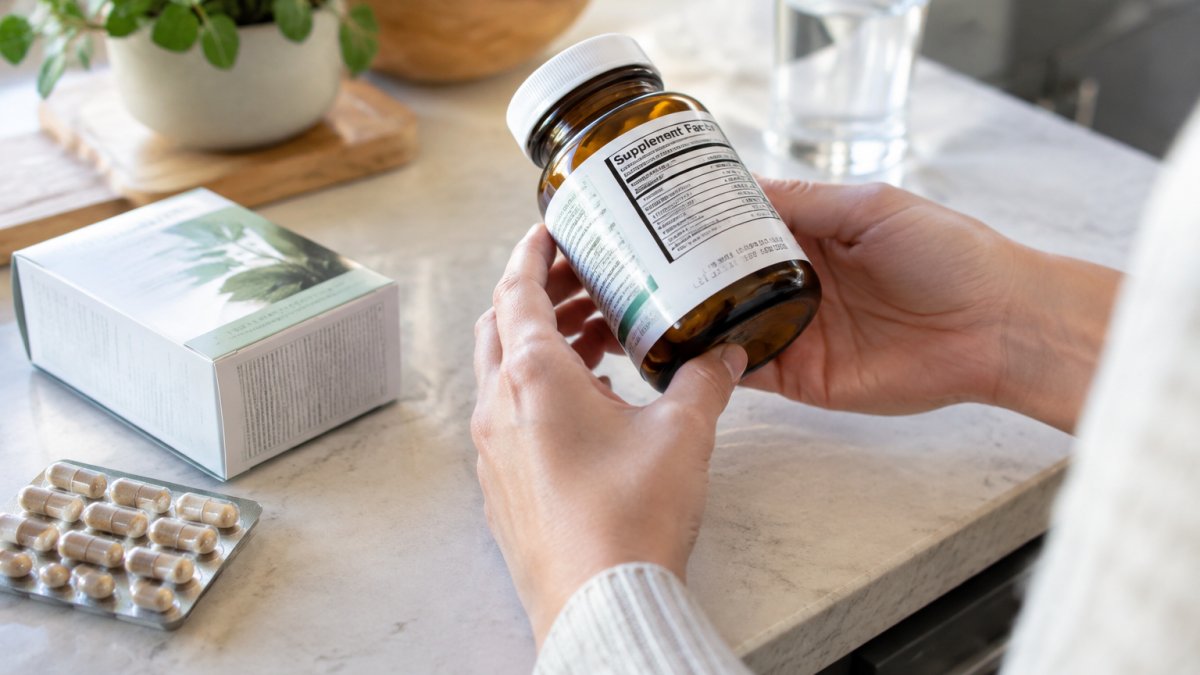
Bottles, Blister Packs, and Cartons: What Each Label Shows
Each package type shows dates differently. Bottles usually carry a stamped month and year, sometimes with a day. Blister packs often print a full date on the foil, including day, month, and year. Cartons may show the date only on the outer box, and the format can vary by manufacturer. A common mistake is checking only the front label; the date almost never lives there. Another mistake is assuming the date on the carton matches the date on the inner bottle, they usually do, but if the bottle has no legible date, the carton becomes your primary record.
How to Tell Expiration, Best-Before, and Use-By Dates Apart
These three labels mean different things. An expiration date marks the last point a manufacturer guarantees full potency. A best-before date signals peak quality, not safety. A use-by date is the firmest of the three and usually appears on perishable items.
For supplements, most products carry an expiration or best-before date. The FDA guidance on expiration dating explains that dates reflect manufacturer testing, not a sudden safety cliff.
Reading these labels well pairs with reading the rest of the panel. Our guide on choosing electrolyte powder without artificial sweeteners walks through the same label-reading skills.
Each date label carries a different meaning, so match the wording on the package to what it actually promises.
| Label | What it means | Notes |
|---|---|---|
| Expiration date | Last point manufacturer guarantees full potency | Most supplements carry this or best-before |
| Best-before date | Signals peak quality, not safety | Common on supplement labels |
| Use-by date | Firmest of the three | Usually appears on perishable items |
How to Check Expiry Date by Batch Number
When the printed date is missing, smudged, or unclear, the batch code, also called a lot number, is your backup. Here is how to check expiry date by batch number in four steps:
- Find the lot number. It is usually a short code near the date stamp, on the base or neck of a bottle, or on the foil of a blister pack. It may contain letters, numbers, or both.
- Note the format. Write down the code exactly as it appears, including any spaces or hyphens. Do not assume the code itself encodes the date; most lot numbers identify a production run, not a calendar date.
- Contact the manufacturer. Use the phone number or contact form on the product label or the brand's website. Provide the product name, lot number, and any other codes on the package.
- Ask for the production date and shelf life in writing. Request the manufacture date and the labeled shelf life so you can calculate the expiration date yourself. Keep the written response for your records.
Reading Lot Codes and Date Formats Correctly
Date formats vary by country and manufacturer. A code like "08/2027" means August 2027 in most markets, but some use day-first formats such as "08/09/2027" for 8 September 2027. Look for a legend near the date stamp, many packages include a small key like "MM/YYYY" or "DD/MM/YYYY." If no legend is present, treat the date as ambiguous and confirm with the manufacturer.
Lot numbers themselves rarely encode the date directly. They identify a production run, which the maker can trace to a manufacture date and shelf life. What most guides miss is that the batch code is often the only reliable record once ink fades, but it is not a substitute for an expiration date. A lot number tells you when a product was made; it does not tell you when it expires unless the manufacturer provides that mapping.
If a manufacturer will not confirm the production date and shelf life in writing, treat the product as having an unknown date and do not rely on it for daily use.
How to Check the Expiry Date of a Product If It Is Erased
A smudged or erased date does not mean the product is bad. It means you cannot confirm it. Treat an unreadable date as unknown, not expired.
Try these steps:
- Photograph the label under bright light and zoom in
- Check the carton or receipt for a matching date
- Call the manufacturer with the batch code
- If nothing confirms the date, discard the product
Buying supplements with rubbed-off dates from unfamiliar sellers can be risky.
Supplement Shelf Life After Opening: What Changes
Opening a bottle starts the clock on a second, shorter shelf life. Air, moisture, and light slowly break down active ingredients. Gummies and softgels change fastest because they hold moisture.
Capsules and tablets hold up longer when stored correctly. Our sugar-free elderberry sea moss gummies show a typical example: once opened, keep the lid tight and store away from heat.
Signs a product has turned:
- Sticky or clumped capsules
- A sour or odd smell
- Color shifts or spots
- Crumbling tablets
Expired Vitamins Safety: When to Keep and When to Discard
Expired vitamins safety comes down to two questions: how far past the date, and how was it stored? A product a few weeks past its date, stored cool and dry, is usually just less potent. The FDA notes on expiration dating extension show some properly stored products stay stable well beyond their labeled date, though that testing covers medical products, not every supplement.
Discard the product if you see:
- Mold, moisture, or discoloration
- A changed smell or texture
- A date more than a year past, with poor storage history
A capsule supplement with a clear serving count makes this call easier. Our whole food fruits and veggies capsules list servings plainly, so you can judge whether an opened bottle is worth keeping.
Storage Conditions That Protect Potency and Packaging Clues
Heat, light, and humidity do more damage than time alone. A bathroom cabinet feels convenient but traps steam. A kitchen shelf near the stove bakes the bottle daily.
Store supplements like this:
- Keep them cool, dry, and out of direct sun
- Tighten the lid after every use
- Leave the silica packet inside
- Keep the original bottle and carton
Packaging gives clues, too. A warped bottle, swollen blister, or stained label all point to moisture exposure. Trust those signs over the printed date.
Stocking Your Shelf with Fresh Earth Wellness
Checking dates only solves half the problem. The other half is buying from a source that ships fresh stock with clear, legible labels.
When you are ready to restock, start with our pure moringa capsules for daily essentials, or browse the AREDS 2 eye vitamin softgels for a dated, fresh-batch option.
Fresh stock and clear labels should be the norm, not a lucky find. Fresh Earth Wellness offers a carefully chosen range of vitamins and wellness products, a fast and user-friendly online experience, and real customer support when you need it. Get started with Fresh Earth Wellness and keep your shelf stocked with fresh, clearly dated supplements.
Frequently Asked Questions
Can I take supplements that expired two years ago?
A printed date marks the end of manufacturer-guaranteed potency, not a hard safety cutoff, according to supplement shelf-life guidance. Two years past that date, potency may have dropped and the product may no longer deliver the label dose. Storage history matters too: heat and humidity speed degradation. If the bottle was kept cool and dry and looks and smells normal, the risk is mainly reduced effectiveness. If it was stored in a steamy bathroom or shows clumping, discoloration, or a strange odor, discard it.
Can I check a supplement's expiration date by its lot number?
Sometimes. Knowing how to check expiry date by batch number means reading the code the way the manufacturer encodes it, since formats vary by brand. A lot number is mainly a traceability code for recalls, and many brands print the date separately as MM/YYYY or DD/MM/YYYY. When the date is encoded inside the lot code, contact the manufacturer with the code and product name. Keep the bottle until you get an answer, and never guess a date from a partial code.
What should I do if a supplement's expiration date has rubbed off?
Check the carton, blister foil, and any insert first, since the date is often printed in more than one place. If nothing remains, note the lot number and contact the manufacturer or retailer for the production date. Without a readable date, treat the product as unknown: use it only if you remember buying it recently and it was stored cool and dry. Otherwise replace it. Buying from a retailer that stores stock properly and rotates oldest stock first reduces the chance of faded or missing dates.
Are expired vitamins safe, and how long do supplements last after opening?
Expired vitamins safety depends on the product and how it was stored, not on the date alone. The FDA notes some properly stored medical products have tested stable beyond their labeled dates, but that does not confirm a specific supplement is still effective. Once opened, most supplements are best used within six to twelve months, because air and moisture exposure speed degradation. Follow the label's storage instructions, keep the cap tight, and discard anything that changes color, texture, or smell.