
 blog
What Ingredients Should a Multivitamin Have?
Last Updated: November 10, 2026
Quick Summary
To know what ingredients should a multivitamin have, look for vitamins A, D, B6, B12, folate, thiamin, riboflavin, and niacin, plus the minerals calcium, magnesium, zinc, iron, and selenium. Check the actual milligram amounts and % Daily Value on the label, not just whether a nutrient is listed, since many formulas contain only small amounts of calcium and magnesium.
- Read the serving size first, because per-serving amounts are not per-pill amounts.
- Check elemental milligrams for minerals rather than the weight of the compound they are bound to.
- Avoid proprietary blends, artificial colors, and megadoses far above the daily value.
- The tolerable upper intake level applies to total daily intake from all sources, including food.
- People taking anticoagulants should discuss any formula with added vitamin K with their prescriber.
Table of Contents
- Essential Multivitamin Ingredients to Look For First
- Reading the Supplement Facts Label Without Getting Fooled
- What Ingredients Should Not Be in a Multivitamin
- Upper Limits and the Risks of Taking Too Much
- How to Choose the Best Multivitamin for Adults
- Should I Take a Multivitamin or Individual Vitamins?
- Check Your Label Before You Shop
- Frequently Asked Questions
Essential Multivitamin Ingredients to Look For First
A multivitamin should cover the core vitamins and minerals your body needs daily, including vitamins A, D, B6, B12, folate, thiamin, riboflavin, niacin, plus calcium, magnesium, zinc, iron, and selenium.
Multivitamin-mineral supplements are among the most widely used supplements, and that popularity makes sense. Most adults want a simple way to fill small gaps in their diet.
But here is what most guides get wrong: more ingredients does not mean better.
The Core Vitamins: A, D, B6, B12, Folate, Thiamin, Riboflavin, and Niacin
These eight vitamins form the backbone of any solid formula. Each one plays a distinct role, and each has a daily value you can check against.
- Vitamin A: supports vision and immune function
- Vitamin D: helps your body absorb calcium for bone health
- B6 and B12: support energy metabolism and nerve function
- Folate: important for cell division, especially before and during pregnancy
- Thiamin, riboflavin, niacin: help convert food into usable energy
If you want a deeper walkthrough of each one, our guide on what vitamins we should take every day covers the practical side in more detail.
The Key Minerals: Calcium, Magnesium, Zinc, Iron, and Selenium
Minerals are where many formulas cut corners. Multivitamin/mineral supplements often contain only small amounts of calcium, magnesium, and potassium, and most multivitamins contain no fiber.
That means you should not expect a single tablet to cover your calcium needs.
- Calcium and magnesium: bone health and muscle function
- Zinc: immune support and wound healing
- Iron: red blood cell production, more important for some people than others
- Selenium: antioxidant support
If calcium and magnesium are your priority, a dedicated option like our liquid calcium with magnesium softgels makes more sense than hoping a multivitamin covers it.
Reading the Supplement Facts Label Without Getting Fooled
The Supplement Facts label tells you exactly what is in each serving, so read the amounts column before anything else.
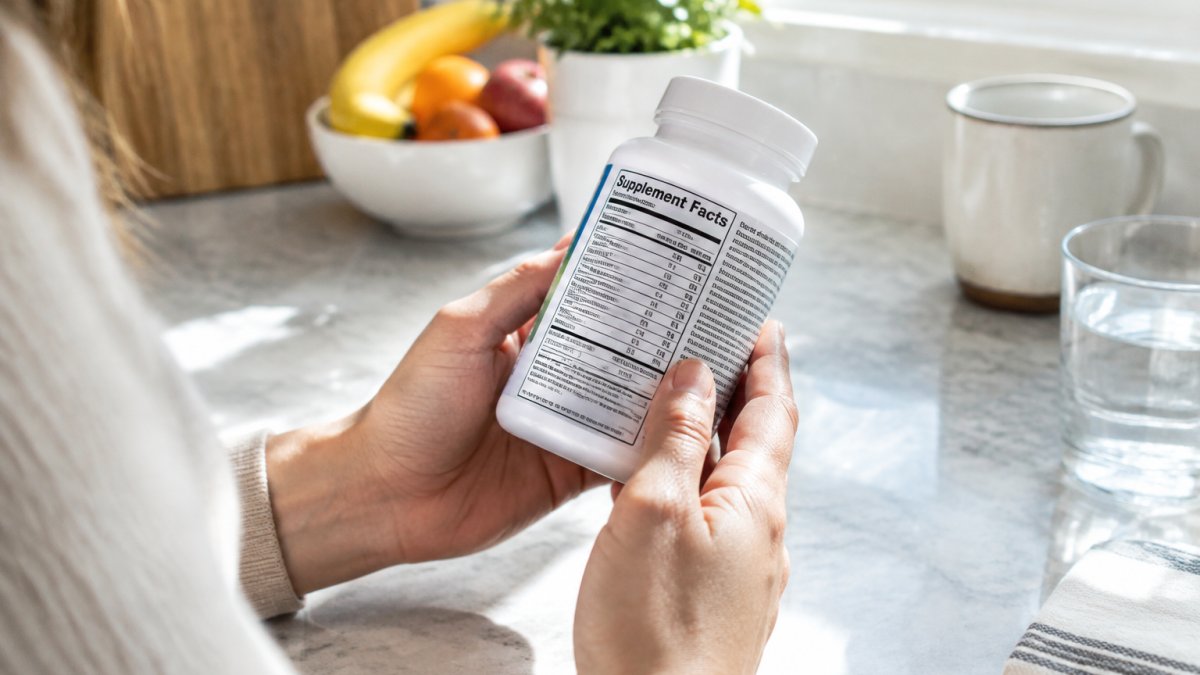
Here is the short version of how to scan a label:
- Serving size: two gummies is not the same as one tablet, and some labels list a serving as two or three capsules, so the per-serving amounts are not per-pill amounts
- % Daily Value: shows how much of each nutrient one serving provides, based on the Daily Value used for labeling rather than your personal requirement
- Elemental amounts: for minerals, check the actual milligrams of the mineral, not the weight of the compound it is bound to
- Nutrient form: the label may name a specific form, such as folic acid versus methylfolate or ferrous sulfate versus ferric citrate, and forms can differ in how well they are absorbed
- "Other ingredients": fillers, colors, and coatings live here, and this list is where gummies often show sugars, syrups, and artificial colors
- Proprietary blends: a blend can list total milligrams without showing how much of each ingredient it contains, which makes it hard to judge whether the amounts are meaningful
Active ingredients vary by product, so never assume two bottles with similar names contain the same thing.
A Practical Label-Transparency Checklist
A label can be accurate and still not tell you much. Use these checks to separate a transparent formula from a vague one:
- Every nutrient has a specific amount, not just a name in a blend
- The serving size is realistic for how you will actually take it
- Mineral amounts are large enough to matter, since many multivitamins contain only small amounts of calcium and magnesium
- The form of each nutrient is named where it matters, such as vitamin D3 versus D2 or folate versus folic acid
- The brand publishes third-party testing or sourcing details, because supplements are not pre-approved by regulators the way drugs are
- The label does not hide stimulants, herbs, or extra ingredients inside a proprietary blend
Watch out: a "complete" label can still be misleading if the serving size is three capsules and you only take one, so compare the amount you will actually take against the amount the label describes.
Forms and Bioavailability: Why the Same Nutrient Is Not Always the Same
Two labels can list the same vitamin at the same milligram amount and still differ in how much your body absorbs. Nutrient form and the food matrix around it can affect absorption, and some forms are better tolerated than others. For example, vitamin D3 and vitamin D2 are both used in supplements but are not identical, and folate appears as folic acid or as reduced forms such as methylfolate.
That does not mean one form is universally superior. A form that is better absorbed may cost more, and a form that is gentler on the stomach may be the better choice for someone who cannot tolerate another.
Third-Party Verification and What It Actually Tells You
Because supplements are not pre-approved by regulators the way drugs are, third-party verification is one of the few outside checks a shopper can use. Certification programs and published testing reports can help confirm that a product contains what the label says, but they do not confirm that the formula is right for you. Treat a certification seal as one piece of evidence rather than a substitute for reading the amounts.
What Ingredients Should Not Be in a Multivitamin
A clean formula avoids unnecessary fillers, artificial colors, and preservatives, and it keeps doses within safe ranges. That last point matters most.
Watch for these:
- Artificial colors and sweeteners in gummy formulas
- Preservatives you would rather not take daily
- Proprietary blends that hide individual amounts
- Megadoses far above the daily value for no clear reason
Contaminants are a real concern too. Third-party testing matters because supplements are not pre-approved by regulators the way drugs are.
Upper Limits and the Risks of Taking Too Much
Every nutrient has an upper limit, and exceeding it regularly can cause side effects. More is not safer. Fat-soluble vitamins like A and D build up in the body, and too much iron or zinc can cause real problems.
A few practical guardrails:
- Do not stack multiple supplements with overlapping ingredients
- Check whether your multivitamin plus a separate D supplement pushes you over
- Talk to a doctor if you take prescription medication, since interactions happen
How Nutrient Stacking Adds Up
The risk is rarely one product. It is the total across everything you take in a day.
A common pattern is a person who takes a multivitamin plus a high-dose D supplement plus a fortified shake and ends up well above the upper limit for vitamin D without realizing it.
Watch out: "more is safer" is the wrong instinct with fat-soluble vitamins and minerals, because excess vitamin A, vitamin D, iron, and zinc can accumulate or cause side effects rather than simply passing through.
Who Needs Extra Caution
Some people should be especially careful about multivitamin ingredients and amounts, and should review any formula with a clinician before starting:
- People taking anticoagulants: vitamin K can affect warfarin and similar medications, so a formula with added vitamin K deserves a conversation with the prescriber
- People with kidney disease: potassium, phosphorus, and some other minerals may need to be limited, and a standard multivitamin may not fit
- People with iron overload or a family history of it: extra iron can be harmful, which is one reason many formulas for older adults leave iron out
- People with thyroid conditions or on thyroid medication: mineral supplements, especially calcium and iron, can interfere with absorption if taken at the same time
- People preparing for surgery or managing a chronic condition: bring the actual label to a clinician rather than describing the product from memory
This is general guidance, not individualized advice. A clinician who knows your medications and lab results can tell you which ingredients and amounts are appropriate for you.
When Testing and a Diet Review Beat Guessing
Upper limits matter most when you already have a reason to take a specific nutrient. If you suspect a deficiency, a blood test ordered by a clinician can confirm it, and a targeted supplement is usually more appropriate than a broad formula with a token amount of everything. A diet review can also show whether fortified foods are already contributing a nutrient, which changes how much room you have before you approach the upper limit.
How to Choose the Best Multivitamin for Adults
A suitable multivitamin for adults matches your age, diet, and health situation, not a generic label. A 30-year-old vegetarian and a 55-year-old on medication have different needs.
Use this quick checklist before you buy:
- Does it list amounts for every nutrient, not just names?
- Are calcium and magnesium amounts realistic, or token?
- Is there iron, and do you actually need it?
- Does the brand publish testing or sourcing info?
- Is the serving size something you will actually keep up with?
That last box gets skipped the most. A formula you take daily beats a perfect one you leave in the cupboard.
When you are ready to compare, our multivitamin gummies are built for people who want a simple daily habit without a handful of pills.
Should I Take a Multivitamin or Individual Vitamins?
A multivitamin suits most people who want broad daily coverage, while individual vitamins suit people with a known, specific gap. If a blood test shows low vitamin D, a targeted D supplement makes more sense than a general formula.
Ask yourself:
- Do you want general coverage? Choose a multivitamin.
- Do you have a diagnosed deficiency? Choose a targeted supplement.
- Do you eat a limited diet? A multivitamin can help fill gaps.
If you are weighing the natural route, our article on whether natural daily vitamins are worth taking digs into that question directly.
Check Your Label Before You Shop
Good nutrition starts with real food, and a multivitamin fills the gaps you cannot always close.
Fresh Earth Wellness offers a carefully chosen range of health and wellness products, from vitamins to skincare, designed to support a healthy lifestyle.
Ready to simplify your daily routine? Fresh Earth Wellness makes it easy to find vitamins that fit your needs, with a straightforward shopping experience and real support when you have questions.
Frequently Asked Questions
What ingredients should be in a multivitamin?
A well-made multivitamin typically includes vitamin A, vitamin D, vitamin B6, vitamin B12, folate, thiamin, riboflavin, niacin, and vitamin C, plus minerals such as magnesium, zinc, selenium, and iron. Check the Supplement Facts label to confirm amounts and forms, and remember that calcium and potassium usually appear in small amounts because they are bulky ingredients.
What ingredients should not be in a multivitamin?
Watch for unnecessary preservatives and artificial colors, and check for contaminants such as lead. Also avoid products that hide proprietary blends behind vague labels, since you cannot tell how much of each multivitamin ingredient you are getting. If you take medication or have a health condition, check with your doctor about drug interactions before buying.
Should I take a multivitamin or individual vitamins?
A multivitamin covers broad daily coverage of essential nutrients in one tablet, which suits busy adults who want convenience. Individual vitamins make sense when a doctor confirms a specific deficiency, such as low vitamin D or iron. If testing shows you need a targeted dose, a single nutrient is easier to adjust than a combined formula.
Do multivitamins contain everything you need?
No. Multivitamin/mineral supplements often contain only small amounts of calcium, magnesium, and potassium, and most multivitamins contain no fiber. A multivitamin bridges gaps in dietary intake, but it does not replace a varied diet. Check the label so you know which nutrients you still need from food or fortified foods.