 how-to
7 Steps to Identifying Genuine Organic Skincare Ingredients
Last Updated: October 25, 2026
Quick Summary
Identifying genuine organic skincare ingredients means reading the INCI ingredient panel top to bottom, separating natural from certified organic claims, and confirming the named certifier's public database record covers cosmetics. A seal only proves a product met a specific standard at a specific time, not that it is safe or effective for your skin.
- Ingredients are listed by weight, heaviest first, so the first five tell you most.
- USDA tiers are 100% organic, at least 95% organic, and at least 70% organic.
- Water and salt are excluded from USDA organic percentage calculations.
- A brand saying certified organic without naming the certifier is a red flag.
- Screenshot the certifier's database record before buying to keep a dated record.
Table of Contents
- Why Organic Skincare Claims Are Harder to Verify Than They Look
- Step 1: How to Read Skincare Ingredient Labels in the Right Order
- Step 2: Tell Natural Skincare Apart From Genuine Organic Ingredients
- Step 3: Understand Organic Skincare Certification and What Each Seal Proves
- Step 4: Verify a Certification Claim Independently Before You Buy
- Step 5: How to Research Cosmetic Ingredients Without Getting Lost
- Step 6: Use a Skincare Ingredient Checker as a Starting Point, Not a Verdict
- Step 7: Spot the Ingredients and Claims That Deserve Caution
- Frequently Asked Questions
Why Organic Skincare Claims Are Harder to Verify Than They Look
The word "organic" on a skincare label is not a regulated cosmetic term in the way most shoppers assume. According to the FDA's guidance on "organic" cosmetics, a product making an organic claim must meet USDA organic rules as well as standard cosmetic labeling laws, which means the claim can mean several different things depending on the seal behind it.
At Fresh Earth Wellness, we hear from customers with sensitive skin who have reacted badly to products labeled "natural" or "organic." The label rarely tells the full story.
Here is the core tension: consumer demand for organic skincare is real, but the word itself is loose. Market.us skincare statistics report that 59% of U.S. survey respondents prefer skincare made from natural or organic ingredients. Meanwhile, NSF's consumer research on personal care found 74% of consumers consider organic ingredients important and 65% want a clear ingredient list.
So the intent is there. The verification is not.
Below, we walk through seven steps to tell genuine organic skincare ingredients from marketing noise. We cover how to read a label, what certification seals actually prove, and which claims deserve a second look.
Step 1: How to Read Skincare Ingredient Labels in the Right Order
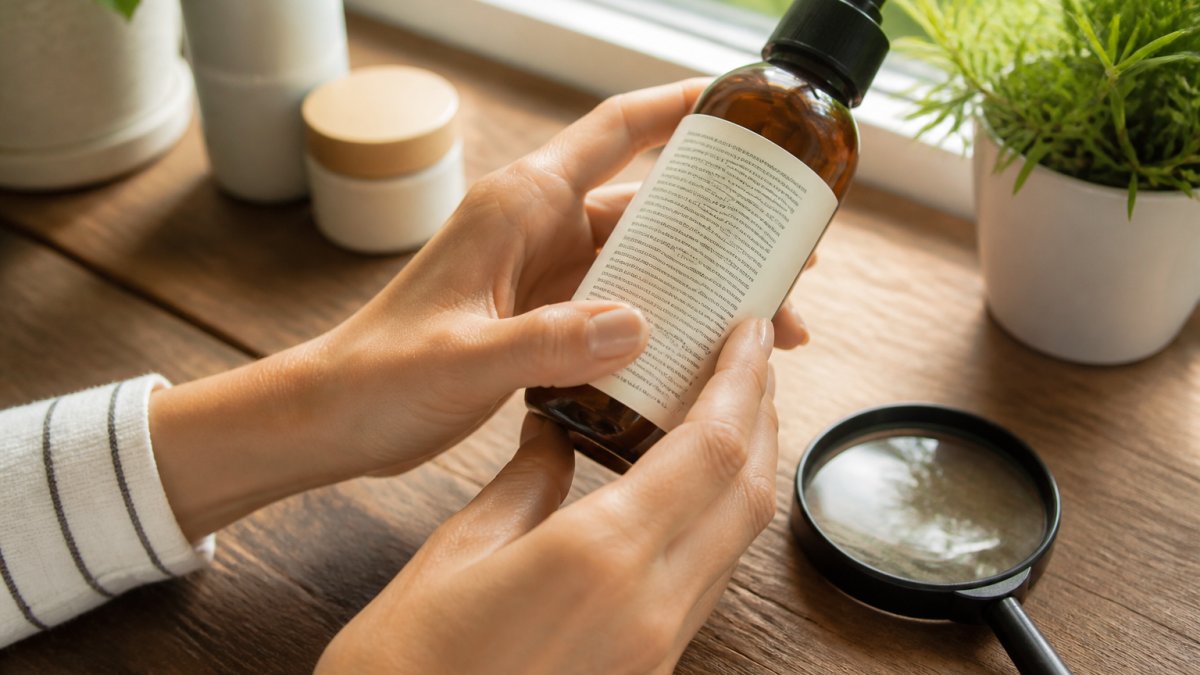
Reading a skincare label correctly means scanning the ingredient panel top to bottom, because ingredients are listed by weight, heaviest first. The first five ingredients tell you most of what the product really is.
INCI Names, Latin Botanical Names, and Common Names
INCI stands for International Nomenclature of Cosmetic Ingredients, the standardized naming system used on labels worldwide. It lists each ingredient by its Latin botanical name or chemical name, not its marketing name.
- Latin botanical name: Simmondsia chinensis instead of "jojoba"
- Common name: what you'd recognize on a store shelf
- INCI name: the formal label term, often a Latin or chemical phrase
Knowing both matters. A label that lists "botanical extracts" without INCI names is hiding something.
Where Water, Salt, and Percentage Math Trip You Up
Here is the caveat most guides skip: water and salt often sit at the top of an ingredient list by weight, but they don't count toward organic percentage calculations under USDA rules. A product can be mostly water and still advertise a high organic content in its non-water portion.
That is not a scam. It is just how the math works. Ask what percentage of the total formula is organic, not just the "active" part.
Step 2: Tell Natural Skincare Apart From Genuine Organic Ingredients
Natural and organic are not the same thing. Natural skincare uses ingredients from nature, but "natural" has no legal definition for cosmetics.
A plant-derived ingredient can be natural without being organic. A mineral compound can be natural and not organic at all.
When you compare a product page that spells out vegan, paraben-free and organic claims, like this organic self tanning serum, test each claim against the certification it names.
Step 3: Understand Organic Skincare Certification and What Each Seal Proves
An organic skincare certification is a third-party verification that a product's ingredients meet a defined organic standard. The seal matters more than the word on the front of the bottle, but not all seals are equal, and they do not all mean the same thing.
USDA Organic Seal, National Organic Program, and Percentage Thresholds
The USDA Organic seal is the strongest signal in the U.S. market. It falls under the National Organic Program, which sets specific thresholds:
- "100% Organic": all ingredients organic (excluding water and salt)
- "Organic": at least 95% organic ingredients (excluding water and salt)
- "Made with Organic Ingredients": at least 70% organic ingredients
Products below 70% cannot use the seal or the word "organic" on the front panel. Crucially, the USDA program is a food-and-farming standard applied to cosmetics, it verifies agricultural ingredients and processing, not cosmetic safety or efficacy.
How Certification Rules Differ by Market: US vs. International Schemes
A product sold across regions may carry different seals, and each scheme defines "organic" differently. Here is how the major schemes compare on the dimensions that matter to a shopper:
| Scheme | Market | Key Thresholds | What It Verifies | Notable Caveats |
|---|---|---|---|---|
| USDA Organic (NOP) | US | 100%, 95%, 70% tiers | Organic agricultural ingredients, processing, and handling | Does not assess cosmetic safety or efficacy; water and salt excluded from percentage math |
| ECOCERT | EU / international | 95% of ingredients of natural origin; 95% of plant ingredients organic; 10% organic of total | Organic farming, processing, and environmental footprint | Thresholds are calculated on plant ingredients, not the whole formula, so a product can be mostly water |
| COSMOS | EU / international | COSMOS ORGANIC: 95% of plant ingredients organic, 20% organic of total; COSMOS NATURAL: 95% of plant ingredients natural | Organic and natural content, green chemistry, and packaging | Two tiers (ORGANIC vs. NATURAL) can confuse shoppers; NATURAL is not organic |
| Soil Association | UK | 95% of plant ingredients organic; 70% organic of total for "made with" | Organic farming and processing | UK-specific; not a US legal standard |
A common pattern is that European schemes often calculate organic percentages on plant-derived ingredients rather than the whole formula, which can make a mostly-water product look more organic than it is. Always ask what the percentage is measured against.
If you want to see what a certified organic label looks like in practice, this certified organic castor oil lists its organic claim clearly so you can inspect it against the thresholds above.
Step 4: Verify a Certification Claim Independently Before You Buy
Verifying a claim takes about two minutes, but most shoppers stop at the logo. A logo on a bottle is a claim; a record in a certifier's database is evidence. Here is a practical, step-by-step walkthrough that takes you from an ingredient list to a purchase decision.
A Worked Example: From Label to Verified Purchase
Imagine you are holding a serum labeled "Certified Organic" with a USDA seal and this ingredient panel:
Aloe barbadensis leaf juice, water, Simmondsia chinensis (jojoba) seed oil*, glycerin, Rosa canina fruit oil*, sodium hyaluronate, Lavandula angustifolia oil*, tocopherol.
(The asterisk * typically denotes certified organic ingredients.)
Step 1, Read the panel top to bottom. Water and aloe juice are first by weight.
Step 2, Identify the certifier. The label says USDA. Confirm the seal is the official USDA Organic seal, not a lookalike.
Step 3, Search the certifier's public database. Go to the USDA Organic Integrity Database (the public search tool for certified operations), not the brand's website.
Step 6, Decide. If the database record matches the product and the scope covers cosmetics, you have verified the claim.
How to Check Certifier Records, Scope, and Product Status
- Certifier name on the label: USDA, ECOCERT, COSMOS, Soil Association, or another named body. A brand that says "certified organic" without naming the certifier is a red flag.
- Public database: Each major certifier maintains a searchable list of certified operations. Search the company name, not the product marketing name.
- Scope: Confirm the certification covers cosmetics or personal care, not just food or raw ingredients.
A brand can say "certified organic" without naming the certifier. That is a red flag. Real certifications name the body that issued them, and that body's records should confirm the product you are holding.
Step 5: How to Research Cosmetic Ingredients Without Getting Lost
Researching cosmetic ingredients starts with the INCI name, not the marketing name.
Use these sources in order:
- The certifier's database for organic status
- Public cosmetic ingredient databases for safety and function
- Peer-reviewed reviews for health and allergy considerations
A 2024 review indexed in PubMed Central on cosmetic health risks and toxicology notes that ingredient safety depends on the specific compound, concentration, and how it is used, not on whether it is labeled natural.
If you want a concrete listing to practice on, this certified organic rosemary essential oil shows a full INCI name and organic claim you can check line by line.
Step 6: Use a Skincare Ingredient Checker as a Starting Point, Not a Verdict
A skincare ingredient checker is a tool that flags ingredients by function or safety rating. It is useful for a fast first pass, but it is not a verdict.
Checkers rely on databases that vary in quality and update frequency. They often rate ingredients in isolation, without context for concentration or your skin's specific needs.
Use a checker to:
- Spot ingredients you want to research further
- Compare INCI names across products
- Flag common irritants
Do not use it to make a final call. Pair it with the certification check from Step 4.
Step 7: Spot the Ingredients and Claims That Deserve Caution
Some claims deserve a second look before you buy. Watch out for these patterns:
| Red Flag | What It Looks Like | What to Do |
|---|---|---|
| Vague "natural" claim | "All-natural formula" with no certifier | Ask for the certification body |
| Unnamed organic percentage | "Contains organic ingredients" | Request the exact percentage |
| No INCI list | "Botanical blend" only | Skip it; real labels list INCI names |
| Fragrance without detail | "Fragrance" or "parfum" alone | Check for a full allergen breakdown |
| Certifier not named | "Certified organic" with no seal | Verify independently before buying |
If you want to compare a product that states its details plainly, this cold-pressed organic castor oil pack spells out cold-pressed, organic cotton and certification details you can check.
One more caveat: an organic claim does not guarantee a product is safe or effective for your skin. Patch-test anything new, especially if you have sensitive skin.
Frequently Asked Questions
How can you tell if skincare ingredients are genuinely organic?
Start with the ingredient list, not the front of the bottle. Organic ingredients appear under INCI or Latin botanical names, and a real claim is usually backed by a certification seal such as the USDA Organic seal, which requires compliance with National Organic Program rules. NSF reports that 74% of consumers consider organic ingredients important in personal care, yet an unqualified organic claim is not a standalone FDA cosmetic standard. Check the certifier, the seal, and the percentage before you trust the label.
What should you look for on an organic skincare label?
Look for four things: a named certifying body and seal, the organic percentage stated clearly, full INCI ingredient names rather than vague terms like botanical extract, and a complete ingredient list with no missing fragrance breakdown. The FDA notes that cosmetics making organic claims must meet USDA organic rules as well as FDA labeling requirements. Market.us reports 59% of U.S. survey respondents prefer natural or organic skincare, so labels lean on that preference, which is exactly why the certification line matters more than the marketing copy.
How accurate are skincare ingredient checker apps?
A skincare ingredient checker is useful for flagging unfamiliar INCI names and known allergens, but it is not a verdict. Apps work from databases that may lag behind reformulations, and they often score ingredients without context such as concentration or your own skin suitability. Use a checker to build a shortlist of names to research, then confirm each one against a primary source like the certifier's database or a published review. Treat every score as a prompt to verify, not a final answer.
Which skincare ingredients should people with sensitive skin check carefully?
Watch for essential oils, fragrances, and fragrance blends listed simply as parfum, since these are common triggers for reactive skin. Also scan for PEG derivatives, synthetic detergents, and preservatives high in the list, where concentrations are greatest. A 2024 review in PubMed Central discusses health risks and limitations across cosmetic ingredients, and it does not establish that organic products as a category are safer. Patch test anything new, and introduce one product at a time so you can isolate a reaction.
The hardest part of buying genuine organic skincare is not finding products. It is trusting the label. Fresh Earth Wellness stocks a curated range of wellness and skincare goods, with a fast, user-friendly shopping experience and real customer support if something goes wrong with your order. We focus on high-quality products at affordable prices, so you can shop with confidence. Get started with Fresh Earth Wellness and find skincare you can actually verify.