 ultimate-guide
The Ethical Wellness Shopping Guide for Conscious Buyers
Last Updated: October 31, 2026
Quick Summary
Purchasing ethical wellness goods online requires verifying three things before checkout: a named third-party certification with a searchable database, a supply chain the brand can describe, and a full ingredient list published before purchase. Treat any ethical wellness claim as unproven until documentation backs it up.
- Run every product through a three-layer check covering certifications, supply chain, and ingredients.
- Ask brands which specific minerals they have identified rather than accepting a blanket conflict-free statement.
- Compare cost per serving or per use, since a cheaper bottle can cost more to use.
- Walk away when a listing promises a cure, hides the ingredient panel, or shows no lot number.
- A product with two relevant certifications beats one with six irrelevant marks.
Table of Contents
- Why Ethical Wellness Shopping Demands More Than a Label
- How to Verify Ethical Product Sourcing Before You Buy
- Conflict-Free Minerals in Wellness Products: What to Ask
- Choosing Ethical Vitamins and Supplements Online
- Sustainable Skincare Products: Ingredients, Packaging, and Claims
- Comparing Certifications and Standards Side by Side
- What Ethical Wellness Goods Really Cost and How to Judge Value
- Red Flags and Online Shopping Safeguards for Wellness Buyers
- Frequently Asked Questions
Why Ethical Wellness Shopping Demands More Than a Label
Purchasing ethical wellness goods online has become a minefield of good intentions and vague claims. For a broader, practical starting point, see this review of ordering organic wellness products online.
Here is the uncomfortable truth: a leaf icon on a label proves nothing. What separates real ethical wellness sourcing from greenwashing is documentation you can check, not adjectives you can feel.
How to Verify Ethical Product Sourcing Before You Buy
Verification starts with three questions: who made it, what is in it, and who checked. If a listing cannot answer all three, treat the ethical claim as unproven.
The Three-Layer Check: Certifications, Supply Chain, and Ingredients
Run every product through this sequence before you buy.
- Certifications: Is there a named, third-party certifier with a registration number or searchable database? "Eco-friendly" is not a certification.
- Supply chain: Does the brand name its manufacturers or sourcing regions, or at least state where final assembly happens?
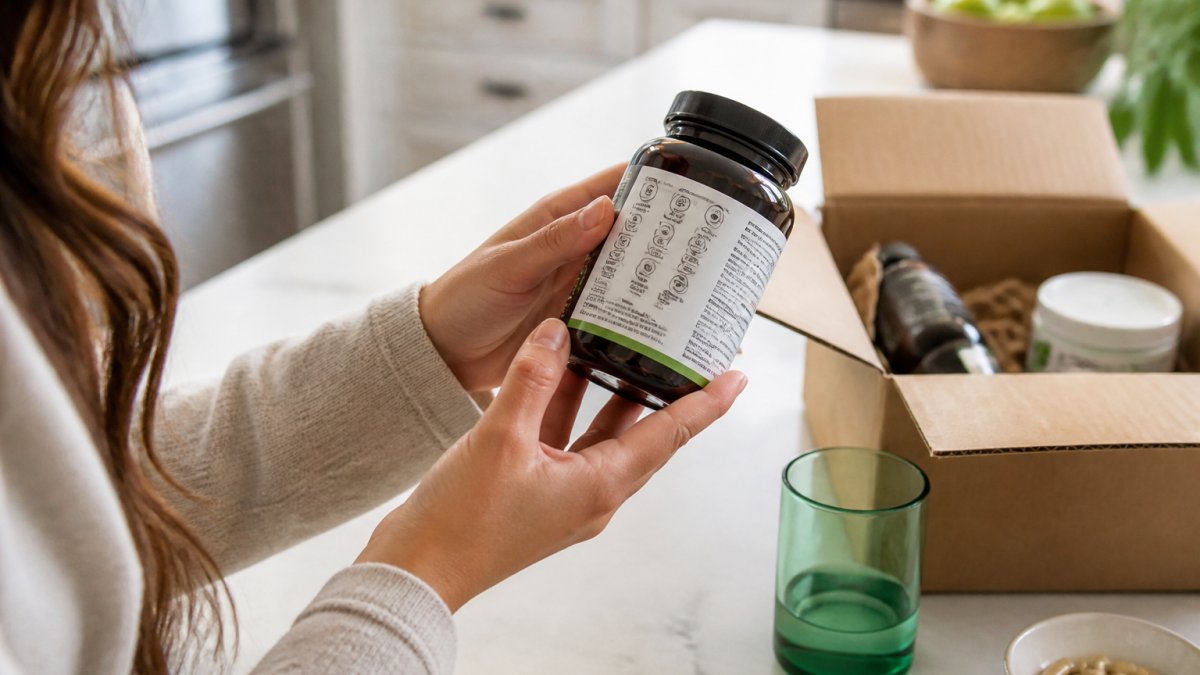
- Ingredients: Is the full ingredient list published before purchase, including excipients and "other ingredients"?
An honest seller will pass all three without prompting. A seller who deflects on any layer is telling you something useful.
Conflict-Free Minerals in Wellness Products: What to Ask
Conflict-free minerals in wellness products refer to ingredients sourced without funding armed conflict or forced labor, most commonly tin, tantalum, tungsten, and gold (often called the "3TG" minerals) used in packaging and equipment, plus mica in cosmetics. But you can still ask the right questions and read the answers critically.
Why This Matters for Wellness
Wellness products rarely contain 3TG minerals as ingredients, but they can appear in packaging (tin cans, electronic components in devices), equipment used during manufacturing, and cosmetic pigments (mica). A brand that claims to be ethical but cannot speak to its mineral supply chain has a gap in its story. The issue is not whether a product contains conflict minerals, it is whether the brand has done the work to know.
The Four Questions to Ask
- Which minerals are in your supply chain? A credible brand will name the minerals it has identified (e.g., tin in packaging, mica in eyeshadow) rather than offering a blanket "conflict-free" statement.
- Which audit scheme covers them? Look for named programs such as the Responsible Minerals Initiative (RMI) and its Responsible Minerals Assurance Process (RMAP), or the OECD Due Diligence Guidance for Responsible Supply Chains of Minerals. A brand that cannot name a scheme is likely relying on supplier assurances.
- Do you publish a conflict minerals report? Many companies file a Form SD with the U.S. Securities and Exchange Commission (SEC) if they are subject to the conflict minerals rule. Even if not required, a voluntary report is a strong signal.
- What happens when a supplier cannot verify? The best answer describes a remediation process, engaging the supplier, switching sources if needed, and disclosing the gap. A vague "we trust our suppliers" is not an answer.
What a Credible Answer Looks Like
A credible brand will say something like: "We have identified tin in our packaging and mica in our cosmetics. Our suppliers participate in the RMI's RMAP, and we publish an annual conflict minerals report. Where we cannot verify, we disclose the gap and work with the supplier on a corrective action plan." That level of specificity is rare, but it is the standard to hold sellers to.
Choosing Ethical Vitamins and Supplements Online
Supplements are the hardest category to vet because regulation varies and labels can overreach. The Federal Trade Commission advises that marketers of health-related products, including dietary supplements, must comply with both FDA and FTC requirements, a reminder worth holding sellers to (FTC Health Products Compliance Guidance(EXTERNAL_LINK: FTC Health Products Compliance Guidance | ftc.gov)).
Check for a third-party testing seal, a batch or lot number, and a clearly stated expiry date. Counterfeit and expired stock is a real risk in online supplement retail.
Sustainable Skincare Products: Ingredients, Packaging, and Claims
Sustainable skincare products are formulas built on responsibly sourced ingredients and sold in packaging designed to be recycled, refilled, or minimized, with claims that match the evidence. Ingredient transparency matters more here than in any other category, because "natural" and "clean" have no legal definition.
Look for full INCI lists, fragrance disclosure, and packaging specifics such as refill availability or mono-material construction. Once you know what to check, you can evaluate a facial anti-wrinkle and firming skincare product. Readers weighing these claims can also explore whether eco-friendly wellness products really benefit your health.
Comparing Certifications and Standards Side by Side
Not all certifications carry equal weight, and knowing the difference saves hours of research. The table below maps the common schemes against what each actually verifies.
| Certification | What It Verifies | Best For | Watch Out For |
|---|---|---|---|
| USDA Organic | Agricultural sourcing and processing | Food, supplements, botanicals | Says nothing about labor |
| Fair Trade Certified | Pricing, labor conditions, community premium | Ingredients from smallholder farms | Not a purity standard |
| B Corp | Overall social and environmental performance | Whole-company claims | Scores vary widely |
| Leaping Bunny | No animal testing in supply chain | Skincare and personal care | Silent on packaging |
| FSC | Responsible forestry | Paper and carton packaging | Packaging only |
| Non-GMO Project | GMO avoidance | Supplements and foods | Not an ethics audit |
A product carrying two relevant marks is stronger than one carrying six irrelevant ones. You can practice this comparison on a listing for Sugar Free Elderberry Sea Moss Gummies.
What Ethical Wellness Goods Really Cost and How to Judge Value
Ethical wellness goods often cost more, and that premium can be legitimate when it pays for audits, fair wages, and better materials. It is not legitimate when it pays for a logo. The challenge is telling the difference without a spreadsheet. Below is a practical framework for judging value, including budget tiers, cost-per-use math, and the questions that expose a premium built on marketing rather than substance.
The Three-Tier Budget Framework
Most ethical wellness products fall into three rough price bands.
- Mid tier (verified multi-claim): Products carrying two or more relevant certifications, or brands that publish supply-chain details and third-party test results. The premium here often reflects real audit costs. Look for batch numbers, named testing labs, and specific sourcing regions.
- Premium tier (full transparency): Brands that publish cost breakdowns, pay living wages verified by a third party, and use refillable or low-impact packaging. The premium can be substantial, so demand documentation: fair-trade premiums paid, audit reports, and packaging lifecycle data.
If a product sits in the premium tier but offers only a single self-declared badge and vague sourcing language, the premium is likely marketing.
Cost-Per-Use: The Only Fair Comparison
Bottle price is misleading. Compare cost per serving, per application, or per day of use. For example, a supplement that lasts twice as long can cost less per day even at a higher bottle price.
For skincare, divide the price by the number of uses you realistically get from the package, not the number the brand claims. A 50ml serum used twice daily might last six weeks; a 30ml serum used once daily might last two months.
When the Premium Is Justified, and When It Isn't
A premium is justified when you can trace it to a specific cost: a named certification with an audit trail, a fair-trade premium that goes to producers, third-party testing for purity or potency, or packaging that is genuinely refillable or compostable. It is not justified when the only difference is a leaf icon, a vague "clean" claim, or a story about the founder's journey.
Ask three questions before paying more:
- What does the certification actually verify? (See our certification comparison above.)
- Can I find the audit or test result? A searchable database or a downloadable certificate is a good sign.
- Is the premium proportional to the documented cost? If a product costs twice as much as an uncertified equivalent but carries only one relevant certification, ask why.
Pricing depends on the product, quantity, and current availability, so check Fresh Earth Wellness's website for current prices or a quote rather than relying on a remembered number. The framework above works regardless of where you shop.
Red Flags and Online Shopping Safeguards for Wellness Buyers
Walk away when a listing promises a cure, hides the ingredient panel, shows no lot number, or sells a supplement at a price far below other sellers.
A 2023 study by JY Ang and coauthors in PubMed Central found that consumers accept a level of risk when buying health products online (study on online health product purchases(EXTERNAL_LINK: study on online health product purchases | pmc.ncbi.nlm.nih.gov)).
Frequently Asked Questions
How can I tell if a wellness product is ethically sourced?
Start with third-party certifications rather than the brand's own claims. Look for seals that require supply-chain audits, then check whether the product page names its ingredient origins and manufacturing partners. If a brand cannot explain where its raw materials come from, treat the ethical claim as unproven until it does.
What certifications should I look for when buying ethical wellness products?
The right certification depends on the product. For skincare and personal care, look for organic and cruelty-free standards that carry independent audits. For supplements, check for quality and purity testing marks. For sourcing, look for fair trade and responsible-mining certifications where minerals are involved. A certification only counts if it comes from a body that inspects the supply chain, not a logo the brand designed itself. Compare what each standard actually covers before assuming two seals mean the same thing.
How can I check whether minerals in wellness products are conflict-free?
Ask the brand for its mineral sourcing policy and whether it maps its supply chain back to the smelter or refiner. Conflict-free minerals in wellness products means the tin, tantalum, tungsten, and gold in the supply chain are not funding armed conflict, and responsible brands publish this information. If a brand has no answer, or points only to a general ethics page, that is a gap. Request documentation in writing before you order, especially for supplements and products with metal packaging or components.
Are natural or organic wellness products always ethical?
No. Natural and organic describe ingredients, not labor practices, packaging, or supply-chain conduct. A product can use organic cotton or natural materials and still be made in a facility with poor worker protections. Health-related product claims should be substantiated rather than assumed. Judge ethics on sourcing, certifications, and transparency, and judge natural or organic separately.
What should I look for in sustainable wellness product packaging?
Look for refill options, recyclable or compostable materials, and packaging that matches the product's actual shelf life. A glass jar shipped in three layers of plastic is not a sustainability win. Check whether the brand publishes packaging weights or take-back programs, and factor in shipping distance where you can. The most useful question is whether the packaging reduces total material use, not whether it looks eco-friendly in a product photo.
How can I find ethical vitamins and skincare products online without wasting money?
Set your verification criteria before you browse: certifications you trust, a published sourcing policy, and clear ingredient lists. Then compare products against those criteria rather than against marketing copy. Buy small sizes first when you are trying a new brand, and check the returns policy before ordering.
The challenge is not finding wellness products online. It is finding a seller who publishes the details you need to judge them. Fresh Earth Wellness stocks a curated range of vitamins, supplements, and skincare, pairs each listing with clear product information, and keeps a support team reachable when something goes wrong with an order. Get started with Fresh Earth Wellness and shop a range you can actually verify before you buy.